
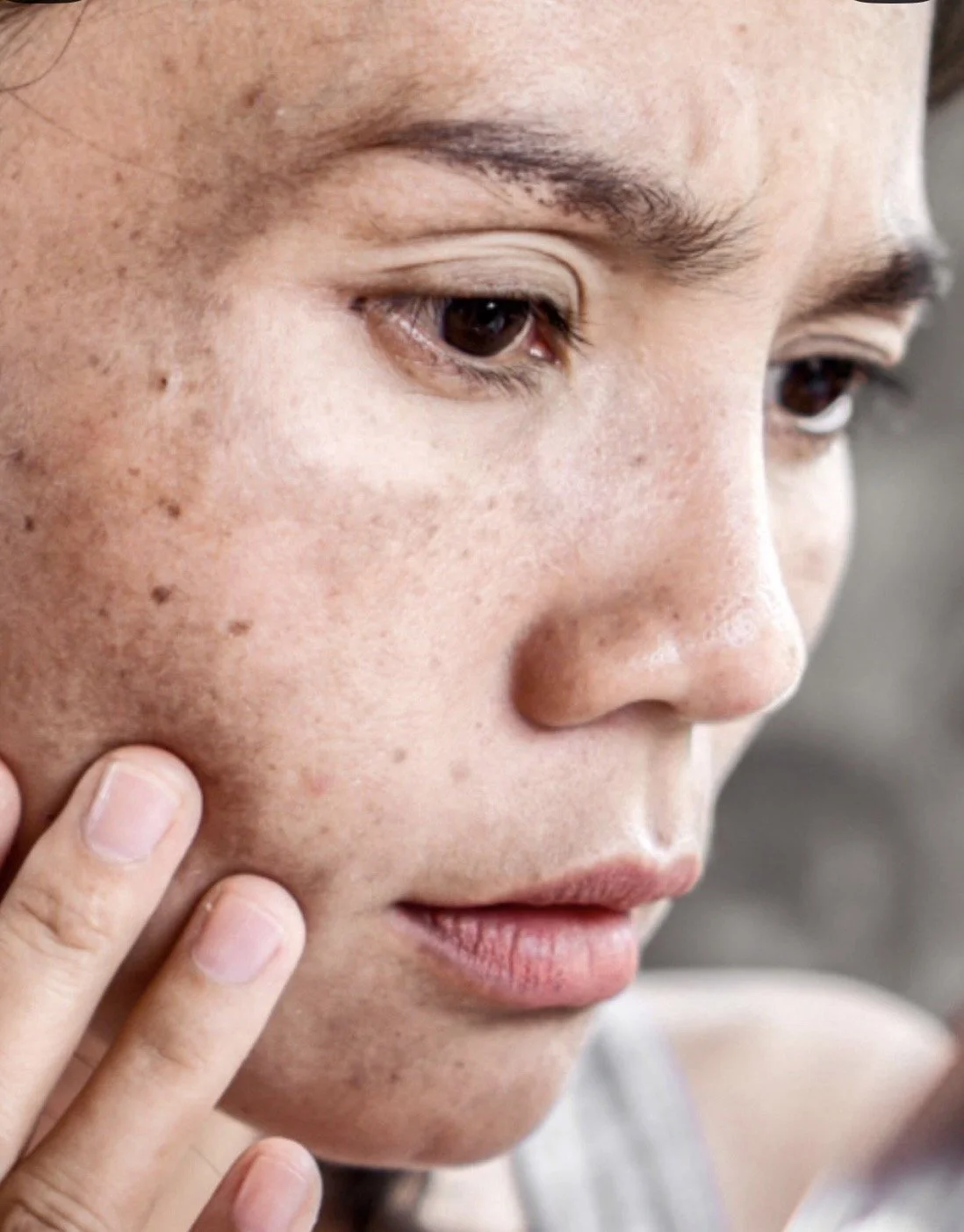
Dark spots, uneven skin tone, and stubborn post-acne marks can be frustrating, especially when you have sensitive skin.
You might have tried brightening products only to experience redness, dryness, or irritation. Instead of achieving a clearer complexion, your skin may feel even more uncomfortable.
That's why choosing the right brightening ingredient matters.
One ingredient gaining attention is alpha arbutin, a popular option for people who want to improve discoloration without relying on more intensive treatments.
Known for its ability to influence melanin production, alpha arbutin is commonly included in skincare formulas designed to promote a more even-looking complexion.
But does alpha arbutin work, and how does it compare with hydroquinone and kojic acid?
In this guide, we'll explore the science behind alpha arbutin for hyperpigmentation, its benefits, suitable concentrations, and how to incorporate it into your skincare routine.
What Is Alpha Arbutin?
Alpha arbutin is a cosmetic brightening ingredient chemically related to hydroquinone.
More specifically, it is a glycosylated hydroquinone compound, meaning its chemical structure contains a sugar component linked to hydroquinone.
It can be produced through controlled manufacturing processes for cosmetic use.
Unlike applying hydroquinone directly, alpha arbutin has a different chemical structure, which affects its behavior in skincare formulations.
How Does Alpha Arbutin Work?
Your skin naturally produces melanin, the pigment responsible for its color.
An enzyme called tyrosinase plays an important role in melanin production.
Alpha arbutin helps inhibit tyrosinase activity, potentially reducing excess pigment formation.
This is why it is included in products targeting dark spots and uneven tone.
However, brightening does not mean removing all natural pigmentation.
The goal is to help improve the appearance of unwanted discoloration while maintaining your natural skin tone.
6 Alpha Arbutin Benefits for Your Skin
Understanding the benefits of alpha arbutin can help you decide whether it belongs in your daily skincare routine.
1. Helps Improve the Appearance of Dark Spots
One of the main reasons people use alpha arbutin for hyperpigmentation is to address uneven pigmentation.
By influencing melanin production, alpha arbutin may help gradually improve the appearance of certain dark spots.
These can include marks associated with previous blemishes and sun exposure.
Results vary depending on the cause and depth of pigmentation.
2. Supports a More Even-Looking Skin Tone
Uneven pigmentation can make the complexion appear patchy.
Alpha arbutin is often included in brightening routines intended to improve overall tone.
With consistent use, suitable formulations may help the complexion appear more balanced.
However, it should not be expected to change your natural skin color.
3. May Be Suitable for Sensitive Skin
Alpha arbutin is often considered a relatively gentle brightening option.
Unlike some exfoliating ingredients, its primary action does not depend on removing layers of skin cells.
This can make it appealing to people who experience discomfort with aggressive exfoliation.
Still, any cosmetic formula can cause irritation or allergic reactions.
A gentle ingredient is not automatically suitable for every sensitive skin type.
4. May Help With Post-Acne Marks
After a breakout heals, some people develop lingering brown or gray spots.
These marks are known as post-inflammatory hyperpigmentation, or PIH.
Alpha arbutin may help improve their appearance by reducing excess pigment production.
However, it does not directly treat active acne or remove pitted acne scars.
Preventing new breakouts and minimizing skin irritation are also important.
5. Can Complement Melasma-Focused Skincare
Melasma often appears as patches of discoloration on the cheeks, forehead, or upper lip.
Sun exposure, hormones, and other factors can contribute to this condition.
Alpha arbutin has been studied in combination brightening formulations for melasma.
Although the results are promising, melasma can be persistent and may require more than a cosmetic serum.
6. Works Alongside Other Brightening Ingredients
Alpha arbutin is often combined with ingredients such as niacinamide, vitamin C, or tranexamic acid.
These ingredients influence pigmentation-related processes through different mechanisms.
A thoughtfully formulated combination may offer complementary benefits.
However, combining ingredients does not automatically produce faster results or guarantee less irritation.
Does Alpha Arbutin Really Work?
The evidence for alpha arbutin is promising, but it is important to understand what the studies actually show.
A published clinical study evaluated a skincare regimen containing 2% alpha arbutin and 10% trihydroxybenzoic acid glucoside, alongside sunscreen, in women with facial melasma or dark spots.
After 90 days, researchers reported improvements in pigmentation measurements and skin appearance.
The regimen was generally well tolerated.
However, because the formulation contained another brightening ingredient and was used with sunscreen, the improvements cannot be attributed to alpha arbutin alone.
Other studies have investigated arbutin-containing formulations, but the evidence for alpha arbutin as a standalone treatment remains less extensive than for established prescription treatments.
The takeaway: Alpha arbutin has a scientific basis for use in brightening skincare, but expectations should remain realistic.
Alpha Arbutin vs Hydroquinone: What's the Difference?
One of the most common comparisons in skincare is alpha arbutin vs hydroquinone.
Both influence melanin production, but they differ in evidence, chemical properties, and typical use.
Hydroquinone is an established treatment for certain pigmentation disorders.
It can produce noticeable improvements when used appropriately under professional supervision.
However, irritation and rare complications such as exogenous ochronosis have been associated with prolonged or inappropriate use.
Alpha arbutin is commonly used in cosmetic skincare as a potentially gentler alternative.
Alpha Arbutin vs Hydroquinone Comparison
| Feature | Alpha Arbutin | Hydroquinone |
|---|---|---|
| Main action | Inhibits tyrosinase activity | Inhibits melanin production |
| Typical use | Cosmetic brightening | Treatment of pigmentation disorders |
| Evidence | Promising, especially in combinations | More extensive clinical evidence |
| Sensitive skin | Often relatively well tolerated | Can cause irritation |
| Results | Usually gradual | May be more pronounced under appropriate treatment |
| Main consideration | Formulation and limited standalone evidence | Appropriate supervision and duration |
Is Alpha Arbutin Safer?
Alpha arbutin has been evaluated for cosmetic safety at specified concentrations.
For example, the European Union's Scientific Committee on Consumer Safety concluded that alpha arbutin is safe at concentrations up to 2% in face creams and 0.5% in body lotions.
However, alpha arbutin can undergo some conversion to hydroquinone, so formulation quality and impurity control still matter.
It should not be described as completely free from hydroquinone-related considerations.
Hydroquinone also remains a legitimate treatment when appropriately prescribed and monitored.
Alpha Arbutin vs Kojic Acid
Kojic acid is another ingredient used to address uneven pigmentation.
Like alpha arbutin, it influences tyrosinase activity.
However, the two ingredients differ in formulation characteristics and individual tolerability.
Which Is Gentler?
Alpha arbutin is frequently selected for formulations intended for sensitive skin.
Kojic acid can cause irritation or contact allergy in some individuals.
However, it would be inaccurate to claim that alpha arbutin is always gentler.
The concentration and complete formula determine how a product performs.
Which Works Faster?
There is insufficient evidence to establish a universal winner.
Neither ingredient has a guaranteed brightening timeline.
Response depends on the pigmentation concern, formulation, consistency, and sun protection.
Alpha Arbutin vs Beta Arbutin
You may also encounter beta arbutin on skincare ingredient lists.
Alpha and beta arbutin share similar chemical components but differ in how the sugar is attached.
These structural differences can influence their biological activity.
Some experimental studies suggest that alpha arbutin may have stronger tyrosinase-inhibiting activity in certain testing conditions.
However, that does not automatically mean alpha arbutin performs better in every finished skincare product.
Studies also indicate that the stability of both forms depends on formulation conditions, including pH.
Choosing a well-formulated product is more useful than assuming one form is universally superior.
Alpha Arbutin Concentration Guide
Concentration is one of several factors that influence how a brightening product performs.
0.5%–1% Alpha Arbutin
Lower concentrations may be included in everyday skincare products.
They may appeal to people who prefer a conservative approach, although effectiveness depends on formulation.
2% Alpha Arbutin
Two percent is a commonly discussed concentration in facial brightening skincare.
It is also the maximum concentration established for face creams under relevant EU cosmetic restrictions.
Clinical research has evaluated 2% alpha arbutin in combination formulas, but this does not prove it is the optimal concentration for every product.
Does Higher Concentration Mean Better Results?
Not necessarily.
Higher concentrations can raise safety and formulation concerns without guaranteeing better performance.
Choose products from reliable sources and follow their directions.
How to Choose the Best Alpha Arbutin Serum
Finding the best alpha arbutin serum means evaluating more than the ingredient percentage.
Consider Your Main Skin Concern
If you're concerned about post-acne marks, prioritize a routine that also addresses the causes of new breakouts.
For melasma, reliable sun protection is particularly important.
Look for a Comfortable Formula
If your skin is sensitive, consider fragrance-free or otherwise well-tolerated formulas.
Avoid unnecessary combinations of strong active ingredients.
Consider Complementary Ingredients
Niacinamide, vitamin C, and tranexamic acid are sometimes included alongside alpha arbutin.
They may help address different aspects of uneven pigmentation.
However, effectiveness and tolerability depend on the specific combination.
Review the Product Claims
A brand should be able to substantiate its ingredient concentrations and performance claims.
Statements such as "fades melasma in seven days" or "completely irritation-free" deserve caution.
A Thoughtful Approach to Brighter-Looking Skin
A brightening routine should support your skin rather than overwhelm it.
For women dealing with uneven pigmentation and sensitivity, consistency and comfort are especially important.
Iconique offers skincare options designed to complement different beauty routines.
When evaluating brightening formulas, alpha arbutin is an ingredient worth understanding because of its role in regulating melanin production.
Combining it with carefully selected ingredients may offer additional benefits.
However, not every multi-ingredient formula has been tested for superior results.
Before choosing a serum, review its verified ingredient list, concentrations, directions, and suitability for your skin.
How to Use Alpha Arbutin in Your Skincare Routine
Alpha arbutin is commonly incorporated into morning or evening skincare.
The application schedule depends on the finished product.
Morning Routine
Step 1: Gentle Cleansing
Wash your face with a suitable cleanser.
Avoid harsh scrubbing.
Step 2: Apply Your Brightening Serum
Apply a product containing alpha arbutin according to its instructions.
Step 3: Moisturize
Use a moisturizer that maintains hydration and supports skin comfort.
Step 4: Apply Sunscreen
Finish with broad-spectrum SPF 30 or higher.
For pigmentation concerns, consistent sunscreen use is essential.
Evening Routine
Step 1: Cleanse
Remove makeup, sunscreen, and daily impurities.
Step 2: Apply Alpha Arbutin
Use the recommended amount if the product is suitable for evening application.
Step 3: Moisturize
Finish with a comfortable moisturizer.
Some products are intended for twice-daily use, but you do not need to apply alpha arbutin twice daily unless the instructions recommend it.
Can You Use Alpha Arbutin With Vitamin C?
Yes, these ingredients can appear together in skincare routines.
Vitamin C offers antioxidant benefits and may help address uneven tone.
Alpha arbutin targets pigmentation through its effects on tyrosinase.
Do You Need to Separate Them?
Not always.
Some formulations combine both ingredients.
If you're using separate products, you may apply vitamin C in the morning and alpha arbutin in the evening.
You can also follow the products' layering directions if they are compatible.
A mandatory five-minute waiting period is not necessary for every combination.
For sensitive skin, introduce the products gradually rather than starting both simultaneously.
How Long Does Alpha Arbutin Take to Work?
Brightening takes patience.
Some people notice changes in superficial discoloration after several weeks, but deeper pigmentation usually takes longer.
Weeks 1–4
Focus on tolerability and consistent application.
Dramatic changes are not expected immediately.
Weeks 5–8
Some users may begin noticing subtle improvements in uneven-looking tone.
Progress depends on the product and underlying skin concern.
Weeks 8–12
This is a reasonable period to assess whether a brightening routine is helping.
Certain clinical studies of combination formulas have evaluated results over approximately 12 weeks.
Beyond 12–16 Weeks
Persistent melasma and deeper discoloration may require more time or a different treatment approach.
If there is little improvement, reconsider the diagnosis and routine with a qualified healthcare professional.
These timelines are guides, not guarantees.
Why Sunscreen Is Essential for Dark Spots
A brightening serum alone cannot fully address pigmentation if your skin remains exposed to triggers.
UV radiation contributes to many pigmentation concerns.
Visible light can also worsen melasma, especially in deeper skin tones.
Choose broad-spectrum SPF 30 or higher and reapply appropriately during outdoor exposure.
For melasma-prone skin, a tinted sunscreen containing iron oxides may offer useful visible-light protection.
Combine sunscreen with shade and sun-protective clothing whenever practical.
Is Alpha Arbutin Safe During Pregnancy?
Alpha arbutin is sometimes promoted as a pregnancy-safe alternative to hydroquinone.
However, pregnancy-specific human safety evidence remains limited.
Although systemic absorption appears low in available studies, there is not enough reproductive safety information to declare it definitively safe during pregnancy.
If you're pregnant, planning pregnancy, or breastfeeding, review active brightening products with your healthcare provider before using them.
A gentle routine centered on cleansing, moisturizing, and daily sun protection is a reasonable starting point.
Common Alpha Arbutin Mistakes to Avoid
Expecting overnight results: Pigmentation usually improves gradually.
Skipping sunscreen: UV and visible-light exposure can undermine progress.
Combining too many brighteners: Multiple active ingredients may increase irritation.
Using unverified high concentrations: More is not automatically better.
Ignoring irritation: Persistent redness or burning can worsen pigmentation.
Confusing dark marks with scars: Alpha arbutin does not remove indented or raised acne scars.
Frequently Asked Questions About Alpha Arbutin
Does alpha arbutin work for hyperpigmentation?
It may help improve certain types of uneven pigmentation by influencing melanin production. Clinical findings are promising, particularly for combination formulations.
Is alpha arbutin better than hydroquinone?
Not necessarily. Hydroquinone has stronger established treatment evidence, while alpha arbutin may appeal to people seeking a cosmetic brightening option.
Can alpha arbutin help with melasma?
It may be useful as part of a pigmentation-focused routine, but melasma can be persistent and requires reliable sun protection.
Is alpha arbutin suitable for sensitive skin?
It is often relatively well tolerated, but reactions remain possible. Introduce new products gradually.
Can I use alpha arbutin every day?
Many cosmetic products are designed for daily use. Follow the directions for your specific formula.
Can alpha arbutin remove acne scars?
It may help improve the appearance of flat, pigmented post-acne marks, but it cannot remove textural scarring.
Final Thoughts: Gentle Brightening Starts With Consistency
Understanding alpha arbutin for hyperpigmentation can help you make more informed skincare decisions.
Alpha arbutin is a promising ingredient for addressing uneven-looking skin tone and certain dark spots.
Its tyrosinase-inhibiting properties make it particularly interesting for women who want a brightening routine without relying on aggressive exfoliation.
However, it isn't a guaranteed solution for every pigmentation concern.
The best approach combines suitable ingredients, realistic expectations, adequate hydration, and consistent sun protection.
For sensitive skin, gentle care is especially important because irritation can contribute to further discoloration.
With patience and a thoughtful routine, you can work toward a more balanced, radiant-looking complexion.
Fade Dark Spots Gently: Discover Iconique
A radiant complexion starts with skincare that respects your skin's needs.
Whether you're concerned about post-acne marks, uneven tone, or maintaining healthy-looking skin, a balanced routine can make a difference.
Discover Iconique's skincare collection and explore options that complement your everyday beauty goals.
Ready to refresh your brightening routine?
Explore Iconique Skincare and find products suited to your skin's needs.
Care for your skin. Stay consistent. Let your natural radiance shine through.
