
Dark spots, redness, and uneven skin tone can be frustrating, especially when your skin reacts easily to strong skincare ingredients.
For women with sensitive skin, finding a brightening product that feels comfortable can be challenging. Some treatments may leave the face feeling dry, tight, or irritated.
But achieving a more radiant complexion doesn't always require aggressive exfoliation.
That's where licorice root extract comes in.
Known for its antioxidant, anti-inflammatory, and pigment-regulating properties, licorice root extract has become a popular ingredient in gentle skincare formulations.
From helping improve the appearance of dark spots to supporting skin comfort, licorice root extract benefits make it an interesting option for women seeking a more balanced skincare routine.
But does licorice extract really brighten skin? Can it help with redness? And is it suitable for sensitive or rosacea-prone skin?
In this guide, we'll explore the science behind licorice root extract, its active compounds, and how to incorporate it into your skincare routine.
What Is Licorice Root Extract?
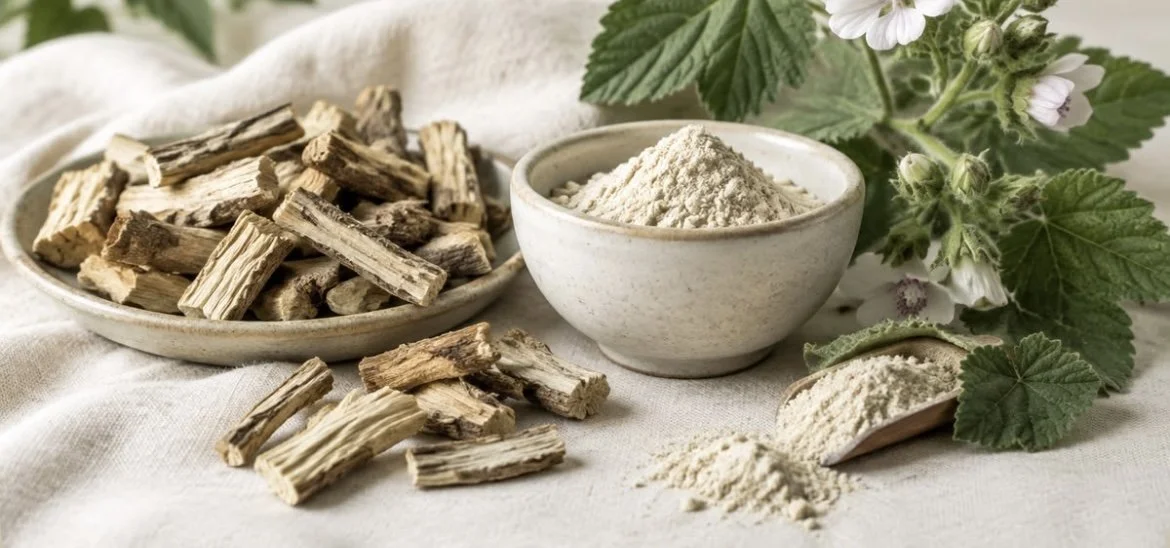
Licorice root extract is a botanical ingredient obtained from plants in the Glycyrrhiza genus.
One commonly studied species is Glycyrrhiza glabra, which contains several naturally occurring compounds with potential skincare benefits.
Licorice has a long history of traditional use and has attracted scientific interest for its effects on pigmentation and inflammation.
Today, it is included in cosmetic formulations designed to improve uneven skin tone and support skin comfort.
What Makes Licorice Root Special?
Licorice root contains several biologically active compounds.
Two particularly interesting substances are glabridin and liquiritin.
These compounds have been investigated for their roles in skin pigmentation.
However, they don't work in exactly the same way.
Glabridin: The Brightening Compound
Glabridin is a naturally occurring compound found in licorice root.
Research suggests that it can influence melanin production by inhibiting tyrosinase activity.
Tyrosinase is an enzyme involved in the process that produces skin pigment.
Glabridin has also demonstrated antioxidant and anti-inflammatory activity in experimental studies.
These properties make it an interesting ingredient for skincare formulations targeting uneven tone.
Liquiritin: Another Pigmentation-Related Compound
Liquiritin is another compound associated with licorice root.
Unlike glabridin, its brightening effects have been linked primarily to melanin dispersion and removal rather than direct tyrosinase inhibition.
Both substances contribute to scientific interest in licorice-derived skincare.
However, their effectiveness depends on the extract, concentration, and formulation.
7 Licorice Root Extract Benefits for Your Skin
Understanding licorice root extract benefits can help you decide whether this botanical ingredient suits your skincare goals.
1. Helps Improve the Appearance of Dark Spots
One of licorice root extract's most recognized potential benefits is its effect on pigmentation.
Glabridin can influence melanin production, while liquiritin has been studied for its effects on existing pigment.
These actions may help improve certain types of uneven discoloration.
For women concerned about post-acne marks or sun-related pigmentation, licorice-derived ingredients may be worth considering.
However, results are generally gradual and depend on the formulation.
2. Offers Anti-Inflammatory Properties
Inflammation can contribute to redness, sensitivity, and uncomfortable skin.
Research has demonstrated that some licorice-derived compounds influence inflammatory processes.
This makes licorice extract interesting for products designed to support skin comfort.
However, laboratory anti-inflammatory activity doesn't guarantee that every licorice serum will reduce visible facial redness.
3. Provides Antioxidant Support
Environmental factors such as UV exposure and pollution can contribute to oxidative stress.
Certain compounds in licorice root demonstrate antioxidant activity.
Antioxidants help neutralize reactive molecules involved in oxidative processes.
This may complement a skincare routine focused on maintaining healthy-looking skin.
However, licorice extract cannot replace daily sunscreen.
4. May Help With Uneven Skin Tone
Uneven pigmentation can make the complexion appear patchy.
Licorice-derived ingredients may support a more balanced-looking complexion by influencing pigment-related pathways.
These effects are particularly interesting for individuals seeking an alternative to aggressive brightening routines.
5. May Be Suitable for Sensitive Skin
Licorice root extract is often used in formulations marketed toward sensitive skin.
Unlike exfoliating acids, its primary brightening activity doesn't depend on removing surface skin cells.
This can make it appealing for people who find frequent exfoliation uncomfortable.
Still, botanical extracts can cause irritation or allergy.
The complete formula matters more than whether an ingredient is labeled natural.
6. Can Complement Moisture-Focused Skincare
A comfortable skin barrier is important for maintaining hydration and minimizing irritation.
Some licorice-derived ingredients have been investigated for their effects on inflammation and barrier-related processes.
However, evidence that licorice extract alone repairs the skin barrier remains limited.
It should be paired with an appropriate moisturizer when hydration is a concern.
7. Offers a Gradual Approach to Brightening
Some women prefer a routine that prioritizes consistent, gentle care rather than intensive treatment.
Licorice root extract may fit this approach.
Its potential brightening properties make it an ingredient worth exploring for long-term skincare.
However, it shouldn't be expected to erase stubborn pigmentation immediately.
Licorice Extract for Dark Spots: How Does It Work?
Understanding licorice extract for dark spots begins with melanin.
Melanin gives skin its natural color.
However, inflammation, sun exposure, and hormonal changes can contribute to uneven pigment production.
This may result in post-acne marks, sun spots, or patches of discoloration.
How Glabridin Affects Pigmentation
Glabridin has demonstrated effects on tyrosinase and other pigmentation-related processes in laboratory research.
By influencing these pathways, it may help reduce excess melanin formation.
How Liquiritin Differs
Liquiritin has been studied for its ability to support pigment dispersion.
This differs from ingredients that primarily act by inhibiting melanin production.
The presence of multiple active compounds helps explain why licorice root continues to attract interest in brightening skincare.
Does It Work for Melasma?
Some small clinical studies have investigated licorice-derived ingredients in pigmentation treatments.
Certain formulations have shown encouraging results.
However, evidence for licorice root extract alone remains limited, especially for persistent melasma.
Consistent sun protection is essential regardless of the brightening ingredient used.
Licorice Root for Red Acne Marks: PIE vs. PIH
One important distinction in skincare is the difference between red and brown marks left after acne.
Although these marks may look similar, they have different underlying causes.
Post-Inflammatory Hyperpigmentation (PIH)
PIH develops when inflammation triggers excess pigment production.
It commonly appears as brown, gray, or dark marks.
Ingredients that influence melanin production, including certain licorice-derived compounds, may help improve their appearance.
Post-Inflammatory Erythema (PIE)
PIE refers to lingering pink, red, or sometimes purple marks following skin inflammation.
Unlike PIH, PIE is primarily associated with vascular changes rather than excess melanin.
This distinction matters.
Licorice root's anti-inflammatory properties may make it interesting for soothing skincare, but there is insufficient evidence that licorice extract directly clears established PIE.
Which Type Do You Have?
Brown or gray marks are more consistent with pigmentation-related changes.
Pink or red marks may be associated with post-inflammatory erythema.
However, appearance alone isn't always enough to distinguish the two.
If marks are persistent or unclear, seek an appropriate skin assessment rather than repeatedly applying stronger brightening products.
Is Licorice Root Extract Good for Rosacea-Prone Skin?
Rosacea-prone skin often reacts to heat, irritating ingredients, and environmental changes.
This makes gentle skincare particularly important.
Certain licorice-derived compounds have been investigated for anti-inflammatory effects.
Research involving licochalcone A, a compound associated with a different licorice species, Glycyrrhiza inflata, has also reported improvements in redness when used as part of specific skincare regimens.
However, findings involving licochalcone A should not automatically be applied to every Glycyrrhiza glabra extract.
Can Licorice Calm Rosacea Redness?
A suitable licorice-containing product may feel comfortable for some people with rosacea-prone skin.
However, licorice extract is not a proven standalone treatment for rosacea.
Some individuals may also react to botanical formulations.
During active flare-ups, prioritize gentle cleansing, moisturizing, and avoiding known triggers.
Introduce new ingredients cautiously.
Licorice Root Extract vs. Stronger Brightening Ingredients
Different brightening ingredients work through different mechanisms.
Licorice extract may appeal to women seeking a gradual approach.
However, it shouldn't automatically be considered more effective or safer than every alternative.
| Feature | Licorice Root Extract | Stronger Brightening Treatments |
|---|---|---|
| Main purpose | Gradual brightening and antioxidant support | Targeted pigmentation management |
| Mechanism | Depends on active compounds | Depends on treatment |
| Sensitive skin | May be well tolerated | Some can be irritating |
| Evidence | Promising but relatively limited | Often more extensive for established treatments |
| Results | Gradual and formulation-dependent | Vary by treatment |
| Main consideration | Extract quality and formulation | Concentration and appropriate use |
For sensitive skin, the best approach isn't necessarily the strongest treatment.
It's one that addresses your concern without creating unnecessary irritation.
How to Choose the Best Licorice Root Serum
Finding the best licorice root serum involves examining the complete formula.
Not all licorice extracts contain identical amounts of active compounds.
1. Check the Ingredient List
Look for clearly identified licorice-derived ingredients.
A product may list Glycyrrhiza Glabra Root Extract or another botanical designation.
2. Consider Complementary Ingredients
Ingredients such as centella asiatica, niacinamide, and glycerin may support a routine focused on hydration and skin comfort.
However, their presence doesn't guarantee that a serum will be irritation-free.
3. Choose a Suitable Texture
For women living in warm, humid environments, lightweight serums may feel more comfortable.
Dry skin may benefit from richer moisturizing care.
4. Avoid Unnecessary Irritants
If your skin reacts easily, consider fragrance-free or otherwise well-tolerated formulations.
Avoid introducing several strong active ingredients simultaneously.
5. Evaluate Product Claims
A high percentage of licorice root extract doesn't necessarily indicate a high concentration of glabridin.
Extraction methods and formulation quality influence the finished product.
Choose products with transparent ingredient information and realistic claims.
Gentle Brightening for Everyday Skincare
A balanced skincare routine should support both skin comfort and a more even-looking complexion.
For women with sensitive skin, aggressive exfoliation isn't always the best starting point.
Botanifique offers botanical-inspired skincare options that complement a thoughtful facial care routine.
When evaluating products for uneven tone, licorice-derived ingredients are worth exploring because of their potential pigment-regulating and anti-inflammatory properties.
A combination involving licorice root extract, centella asiatica, and niacinamide may be appealing to people seeking soothing and brightening support.
However, performance depends on the complete formulation.
Before selecting a serum, review its verified ingredient list and directions.
How to Use Licorice Root Extract in Your Skincare Routine
Licorice root extract can be included in morning or evening skincare, depending on the formulation.
Morning Routine
Step 1: Gentle Cleanser
Begin with a mild cleanser to remove overnight impurities.
Avoid harsh scrubbing.
Step 2: Brightening Serum
Apply your chosen serum according to its instructions.
If the product contains licorice root extract, introduce it gradually to assess tolerance.
Step 3: Moisturizer
Follow with a moisturizer that supports hydration and skin comfort.
Step 4: Sunscreen
Finish with broad-spectrum SPF 30 or higher.
Sun protection is essential when addressing pigmentation.
Evening Routine
Step 1: Cleanse
Remove makeup, sunscreen, and daily impurities.
Step 2: Apply Serum
Use a suitable brightening or soothing serum as directed.
Step 3: Moisturize
Finish with a moisturizer appropriate for your skin.
A simple routine can be more comfortable than layering too many active ingredients.
Can You Combine Licorice Extract With Vitamin C or Retinoids?
Licorice-derived ingredients can be incorporated into routines that include other active ingredients.
However, the complete formulations and individual skin response matter.
With Vitamin C
Vitamin C offers antioxidant and pigmentation-related benefits.
A routine containing both ingredients may provide complementary effects. If your skin is sensitive, introduce them separately before considering combined use.
With Niacinamide
Niacinamide is commonly included in skincare designed to support the barrier and improve uneven tone. It can complement licorice-containing formulas.
With Retinoids
Licorice root may be included in skincare routines that also use retinoids.
However, it has not been proven to prevent retinoid irritation.
If you experience dryness or stinging, reduce unnecessary active ingredients and prioritize hydration.
With Exfoliating Acids
These ingredients are not automatically incompatible.
However, layering too many treatments can increase the likelihood of irritation.
For sensitive skin, simplicity is often the better starting point.
Why Licorice Root Is Popular in Asian-Inspired Skincare
Licorice-derived ingredients appear in many skincare formulations influenced by Asian beauty traditions.
Korean skincare, in particular, often emphasizes hydration, layering, and maintaining skin comfort.
Botanical extracts can complement this approach.
However, not every Korean-inspired product is gentle, and the ingredient itself doesn't guarantee suitability.
The key is selecting a well-formulated product that matches your skin's needs.
How Long Does Licorice Root Extract Take to Work?
Brightening usually requires patience.
Some people may notice improvements in overall skin comfort relatively early, depending on the product.
Changes in uneven pigmentation generally take longer.
A period of 8–12 weeks can be a practical interval for evaluating a consistent routine.
However, this is not a clinically established response timeline for every licorice root extract.
Results depend on the ingredient concentration, formulation, type of discoloration, and sun protection.
More persistent pigmentation may take longer or require additional treatment.
Common Licorice Root Skincare Mistakes
Expecting immediate results: Brightening ingredients generally work gradually.
Skipping sunscreen: Sun exposure can worsen pigmentation.
Assuming natural means irritation-free: Botanical extracts can still cause reactions.
Using too many active ingredients: Overcomplicated routines may increase irritation.
Confusing PIE with PIH: Red vascular marks and brown pigment marks respond differently.
Ignoring product formulation: The quality of the final product matters more than ingredient marketing alone.
Frequently Asked Questions About Licorice Root Extract
Does licorice root extract help fade dark spots?
Some licorice-derived compounds influence pigmentation-related processes. Clinical findings are promising, but results depend on the formulation.
Is licorice root extract good for sensitive skin?
It may be suitable in a well-formulated product, but irritation and allergic reactions remain possible.
Does licorice root help with acne redness?
Its anti-inflammatory properties make it interesting for soothing skincare, but evidence that it directly clears established red post-acne marks is limited.
Is licorice root safe for rosacea-prone skin?
Some people may tolerate it, but it isn't a guaranteed rosacea-safe ingredient or a substitute for appropriate treatment.
Can I use licorice root extract every day?
Many cosmetic products are intended for daily use. Follow the specific product directions.
Can licorice root replace sunscreen?
No. Antioxidant activity doesn't provide reliable standalone UV protection.
Final Thoughts: Gentle Brightening Begins With Balanced Care
Understanding licorice root extract benefits can help you make more informed skincare choices.
Licorice contains compounds such as glabridin and liquiritin that have attracted scientific interest for their effects on pigmentation.
Certain licorice-derived ingredients also demonstrate antioxidant and anti-inflammatory properties.
For women with sensitive skin, these characteristics make licorice root an interesting option for a gradual brightening routine.
However, the evidence doesn't establish that every licorice serum will fade dark spots, treat rosacea, or eliminate post-acne redness.
The most effective routine combines appropriate ingredients, consistent hydration, and reliable sun protection.
Beautiful skin doesn't require aggressive care.
Sometimes, a gentler and more consistent approach is the better choice.
Brighten Without Inflammation
Your skincare routine should help your skin feel comfortable while supporting a naturally radiant appearance.
Whether you're concerned about dullness, uneven tone, or everyday sensitivity, gentle care can make a difference.
Explore Botanifique's brightening collection and discover skincare options that complement your beauty goals.
Ready to refresh your brightening routine?
Explore Botanifique Brightening Skincare and find options suited to your skin's needs.
Nourish your skin. Embrace gentle care. Let your natural radiance shine through.
