
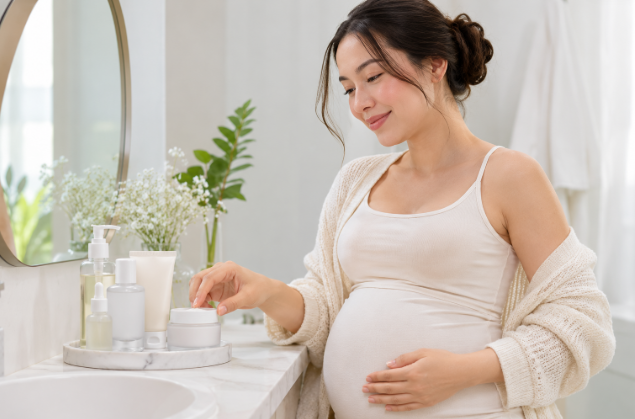
Pregnancy brings exciting changes, but it can also change the way your skin looks and feels.
You might notice unexpected breakouts, increased sensitivity, dryness, or dark patches appearing across your cheeks and forehead. Even products you've used for years may suddenly feel uncomfortable. And with so many skincare ingredients available, one question becomes especially important: Is my skincare routine safe during pregnancy?
Building a pregnancy safe skincare routine doesn't mean giving up your favorite beauty rituals. It means understanding which ingredients are generally considered suitable, which require extra caution, and which should be avoided while pregnant. From retinol and salicylic acid to vitamin C, azelaic acid, and hyaluronic acid, every ingredient has a different safety profile.
Important: This article provides general educational information, not individualized medical advice or a dermatologist's approval. Always review leave-on active ingredients and unfamiliar products with your obstetrician or dermatologist, particularly when pregnant, planning pregnancy, or breastfeeding.
Why Does Your Skin Change During Pregnancy?
Pregnancy affects hormone levels, circulation, and several processes that influence the skin. As estrogen and progesterone levels fluctuate, your skin may respond differently to ingredients that previously worked well. Some women experience a brighter-looking complexion, while others notice acne, increased oil production, or pigmentation changes.
Pregnancy Acne
Hormonal fluctuations can increase oil production and contribute to clogged pores. This may cause breakouts even in women who rarely experienced acne before pregnancy. Because certain acne treatments are not recommended during pregnancy, choosing suitable alternatives becomes important.
Melasma or the Pregnancy Mask
Melasma is a form of hyperpigmentation that commonly appears as brown or gray-brown patches on the cheeks, forehead, and upper lip. Hormonal influences, ultraviolet radiation, and visible light can contribute to its development. Sun protection is one of the most important steps for managing pregnancy-related pigmentation.
Dryness and Increased Sensitivity
Some women experience skin tightness, dryness, or increased sensitivity during pregnancy. Products containing strong exfoliating ingredients or fragrance may become less comfortable. A gentle routine focused on cleansing, hydration, and moisturizing care can help support skin comfort.
Skincare Ingredients to Avoid During Pregnancy
Understanding skincare ingredients to avoid during pregnancy can help you make more informed choices. Not every ingredient carries the same level of risk. Some have established concerns about fetal development, while others are avoided mainly because pregnancy-specific safety data are limited.
1. Retinoids: Avoid During Pregnancy
Retinoids are vitamin A derivatives commonly used for acne, fine lines, and uneven skin texture.
They include:
Isotretinoin
Tretinoin
Adapalene
Tazarotene
Retinol
Retinaldehyde
Oral isotretinoin is a proven human teratogen and can cause severe fetal abnormalities.
Topical retinoids have much lower systemic absorption and have not demonstrated the same level of fetal risk in human studies. Nevertheless, medical authorities recommend avoiding them during pregnancy as a precaution.
This includes cosmetic retinol and retinaldehyde products. If you discover you're pregnant while using a topical retinoid, discontinue it and discuss the exposure with your obstetrician. Accidental topical exposure does not automatically mean fetal harm.
2. Hydroquinone: Best Avoided
Hydroquinone is a skin-lightening ingredient used to treat hyperpigmentation.
Although there is limited evidence demonstrating harm from topical hydroquinone during pregnancy, relatively substantial systemic absorption has been reported compared with many other topical skincare ingredients.
Because pregnancy safety data are insufficient, avoiding hydroquinone is generally recommended. For pregnancy-related pigmentation, consider discussing azelaic acid and consistent sun protection with your healthcare professional.
3. High-Concentration Salicylic Acid: Use Caution
Salicylic acid is a beta hydroxy acid commonly used for acne and clogged pores.
High-dose systemic salicylates can pose risks during pregnancy, but these findings should not be directly applied to every low-concentration topical product. Small-area use of low-strength topical salicylic acid, often up to 2%, is generally considered low risk. However, strong chemical peels, large-area applications, and prolonged use under occlusion should be avoided unless specifically recommended by a clinician. If you prefer a simpler acne routine, azelaic acid is often a suitable alternative.
4. Essential Oils: Evaluate Individually
Essential oils are concentrated botanical extracts used in fragrances and skincare. Their safety varies significantly depending on the oil, concentration, application method, and exposure. Not all essential oils are proven to stimulate uterine contractions, and there is insufficient evidence to classify every essential oil as unsafe. However, some concentrated oils have limited pregnancy safety data or may irritate sensitive skin. Avoid ingesting essential oils for skincare purposes and consult your healthcare professional before using concentrated essential oil treatments.
5. Formaldehyde-Releasing Ingredients: Minimize Unnecessary Exposure
Formaldehyde is associated with irritation, allergic reactions, and health concerns at certain exposure levels. It is particularly important to avoid unnecessary exposure to formaldehyde-containing hair-smoothing treatments that release fumes when heated. Some cosmetic preservatives can release small amounts of formaldehyde, but risk depends on concentration and actual exposure. These ingredients should not automatically be grouped with proven fetal teratogens.
6. Parabens: Understand the Evidence
Parabens are preservatives used in some cosmetic products. Research has investigated their potential endocrine effects, but current evidence does not establish that normal use of all paraben-containing skincare products causes pregnancy complications. Regulatory assessments distinguish among different parabens and permitted concentrations. Women who prefer paraben-free products may choose them, but there is no need to assume that every paraben-containing moisturizer is unsafe during pregnancy.
7. Chemical Sunscreens: Mineral Options Are Often Preferred
Some pregnant women prefer mineral sunscreens containing zinc oxide or titanium dioxide. These filters provide effective ultraviolet protection and have minimal systemic absorption when used in conventional topical formulations. Concerns have been raised about systemic absorption and possible endocrine effects of certain organic UV filters, including oxybenzone.
However, detection of a sunscreen ingredient in blood does not itself demonstrate harm to a developing baby. There is insufficient evidence to conclude that all chemical sunscreens, including avobenzone-containing products, are unsafe during pregnancy. The priority is consistent sun protection. If you are uncertain which sunscreen to use, ask your obstetrician or dermatologist rather than going without SPF.
Pregnancy Skincare Ingredient Safety Chart
| Ingredient | Pregnancy guidance | Main purpose |
|---|---|---|
| Oral isotretinoin | Avoid — proven teratogen | Severe acne |
| Topical retinoids, retinol, retinal | Avoid as a precaution | Acne, aging |
| Hydroquinone | Avoid due to limited safety data | Hyperpigmentation |
| Low-strength topical salicylic acid | Generally low risk with limited use | Acne, clogged pores |
| Strong salicylic acid peels | Avoid unless medically directed | Exfoliation |
| Vitamin C | Generally suitable | Antioxidant, brightening |
| Azelaic acid | Generally considered suitable | Acne, pigmentation |
| Niacinamide | Generally suitable | Barrier support |
| Hyaluronic acid | Generally suitable | Hydration |
| Ceramides | Generally suitable | Moisture barrier |
| Low-strength glycolic/lactic acid | Generally low risk when used appropriately | Exfoliation |
| Peptides | Depends on the peptide and formulation | Cosmetic skin conditioning |
| Bakuchiol | Insufficient pregnancy safety evidence | Retinol-alternative skincare |
| Centella asiatica | Limited pregnancy-specific evidence | Soothing skincare |
| Zinc oxide/titanium dioxide sunscreen | Generally preferred | UV protection |
Pregnancy-Safe Skincare Ingredients to Consider
The good news is that several familiar skincare ingredients can remain part of a pregnancy routine. The goal is to choose products that address your concerns without introducing unnecessary risks.
Vitamin C: Antioxidant Support for Radiant Skin
Vitamin C is widely used to improve the appearance of dullness and uneven pigmentation.
It also provides antioxidant activity, helping protect the skin against oxidative stress. Topical vitamin C is generally considered suitable during pregnancy when used in conventional cosmetic formulations. However, highly acidic formulas can cause stinging, particularly if your skin has become more sensitive. Start with a comfortable formula and introduce it gradually.
Azelaic Acid: A Versatile Choice for Acne and Melasma
Azelaic acid is one of the most useful ingredients to discuss with your dermatologist during pregnancy. It has anti-inflammatory and pigmentation-related effects and is commonly used for acne, rosacea, and uneven skin tone.
Its low systemic absorption and reassuring safety profile make it a frequently recommended pregnancy-compatible treatment. Although it was historically classified as FDA Pregnancy Category B, the FDA no longer uses the old A, B, C, D, and X pregnancy letter categories for prescription labeling. Azelaic acid can still cause temporary tingling, dryness, or irritation.
Niacinamide: Support for the Skin Barrier
Niacinamide, a form of vitamin B3, is widely used in moisturizing and skin-conditioning products. It can help improve the appearance of uneven tone, support the skin barrier, and regulate the look of excess oil. Topical niacinamide is generally considered suitable during pregnancy. It may be especially useful for women experiencing a combination of dryness and blemishes.
Hyaluronic Acid: Lightweight Hydration
Hyaluronic acid is a humectant that helps attract and retain water. It is commonly used in serums and moisturizers designed to improve skin hydration. Topical hyaluronic acid is generally considered suitable during pregnancy because systemic exposure from ordinary skincare use is expected to be minimal. It is a useful ingredient for women whose skin feels dry or tight.
Ceramides: Moisture Barrier Support
Ceramides are lipids naturally found in the skin barrier. They help maintain moisture retention and support the skin's protective function. Ceramide-containing moisturizers are generally considered suitable during pregnancy. They are particularly helpful when hormonal changes leave the skin feeling dry or sensitive.
Glycolic and Lactic Acids: Gentle Exfoliation With Caution
Low-strength glycolic and lactic acid products may be used during pregnancy when appropriate. These alpha hydroxy acids help improve the appearance of dullness and rough texture. Conventional low-strength formulations, such as certain 5–8% products, are generally considered low risk, but concentration alone does not establish safety. Formulation pH, skin sensitivity, application area, and frequency also matter. Avoid strong at-home peels and aggressive exfoliation.
Peptides: Check the Specific Formula
Peptides are used in skincare products for various cosmetic purposes. Some are relatively large molecules with limited skin penetration, but peptides differ widely in structure and biological activity. It is therefore inaccurate to assume that every peptide product is pregnancy-safe simply because peptides are large. Many ordinary cosmetic peptide formulations may present low systemic exposure, but pregnancy-specific evidence is limited. Review unfamiliar peptide products with your healthcare professional.
Centella Asiatica: Soothing Skincare With Limited Pregnancy Data
Centella asiatica is a botanical ingredient commonly used in skincare for its soothing and skin-conditioning properties. It is often included in products intended for sensitive or irritated skin. However, pregnancy-specific evidence for concentrated topical centella preparations remains limited. Ordinary cosmetic use may differ considerably from concentrated extracts or oral supplements. Avoid assuming that natural ingredients are automatically safe.
Bakuchiol: A Retinol Alternative That Requires Caution
Bakuchiol is a plant-derived ingredient often promoted as a gentler alternative to retinol. It has been investigated for improving the appearance of fine lines and photoaging. However, bakuchiol does not have sufficient human pregnancy safety data to be recommended as a proven safe substitute for retinoids. Its plant origin does not establish fetal safety. Women who are pregnant or planning pregnancy should consult their obstetrician before using bakuchiol products and may reasonably choose to postpone them until after pregnancy.
Botanifique Skincare During Pregnancy: A Gentle, Ingredient-First Approach
Pregnancy skincare doesn't need to be complicated. A routine built around gentle cleansing, hydration, and sun protection can help address common concerns while reducing unnecessary exposure to strong active ingredients. Botanifique offers botanical-inspired skincare products that may complement a simple beauty routine. However, suitability during pregnancy depends on each product's complete ingredient list, concentration, and intended use. Rather than assuming every botanical formula is pregnancy-safe, evaluate products individually.
Choose Gentle Cleansing
A comfortable facial cleanser can help remove excess oil, sunscreen, and daily impurities without leaving skin feeling overly dry. Look for a formula that suits your current skin condition. If pregnancy has made your skin more reactive, consider avoiding strongly fragranced products.
Prioritize Moisturization
Moisturizing products can help reduce the feeling of dryness and tightness. Botanifique's facial care collection includes moisturizing options that may be considered depending on their current ingredients. For example, a suitable moisturizer can be used after a gentle cleanser and pregnancy-compatible treatment serum.
Be Careful With Active Botanical Serums
Some botanical skincare ingredients are promoted as natural alternatives to conventional actives.
However, natural does not automatically mean suitable during pregnancy. This is particularly important for bakuchiol. Although bakuchiol is often marketed as a retinol alternative, its pregnancy safety has not been adequately established.
A Botanifique bakuchiol product should therefore not be described as pregnancy-approved without reliable safety evidence and appropriate professional guidance. The proposed Botanifique Bakuchiol Serum and Mineral SPF 50 Tinted product details also require confirmation before being presented as specific product recommendations.
A Simple Morning Pregnancy Skincare Routine
Your morning routine should focus on cleansing, hydration, and protecting your skin from ultraviolet exposure.
Step 1: Gentle Cleanser
Wash your face with a suitable gentle cleanser. Avoid harsh scrubbing or products that leave your skin feeling tight.
Step 2: Vitamin C or Azelaic Acid
Choose one appropriate treatment based on your concerns. Vitamin C may help with dullness, while azelaic acid may be useful for acne and uneven pigmentation. You do not need both ingredients to begin.
Step 3: Niacinamide or Hydrating Serum
A simple hydrating or niacinamide serum can support skin comfort. If your moisturizer already provides adequate hydration, an additional serum may be unnecessary.
Step 4: Moisturizer
Apply a suitable moisturizer to help maintain hydration. A Botanifique moisturizing product may be considered after reviewing its ingredient list.
Step 5: Mineral Sunscreen
Finish with broad-spectrum SPF 30 or higher. Mineral sunscreen containing zinc oxide or titanium dioxide is a practical option during pregnancy. For melasma-prone skin, tinted sunscreen containing iron oxides can provide additional protection against visible light.
A Simple Evening Pregnancy Skincare Routine
Your evening routine should remove impurities and support skin recovery.
Step 1: Remove Makeup and Sunscreen
If needed, use a gentle cleansing product to remove makeup and sunscreen. Double cleansing is optional rather than mandatory.
Step 2: Cleanse Gently
Follow with a mild facial cleanser if necessary. Avoid aggressive cleansing or exfoliating brushes.
Step 3: Apply an Appropriate Treatment
Azelaic acid may be considered for acne or pigmentation. If your clinician agrees, a low-strength lactic acid product may be used occasionally for texture concerns. Avoid combining several potentially irritating activities in one evening.
Step 4: Hydrate
Apply a suitable hydrating serum if needed.
Step 5: Moisturize
Finish with a comfortable moisturizer. If your skin is especially dry, a simple occlusive product may help reduce moisture loss.
Pregnancy Acne: How to Manage Breakouts Safely
Pregnancy acne can be frustrating, especially if you previously relied on retinoids. Fortunately, several approaches may help manage blemishes. Azelaic acid is frequently recommended because of its acne-related benefits and reassuring pregnancy safety profile.
Niacinamide may also help support the skin barrier and improve the appearance of excess oil. A basic routine can include gentle cleansing, an appropriate azelaic acid product, moisturizer, and sunscreen. Avoid picking at blemishes, as this can increase inflammation and the likelihood of post-inflammatory dark marks.
Pregnancy Melasma: How to Reduce the Appearance of Dark Spots
Melasma is particularly common during pregnancy because of hormonal changes and sun exposure.
The most important step is consistent photoprotection. Use broad-spectrum sunscreen every morning, even when spending much of the day indoors near bright windows. A tinted mineral sunscreen containing iron oxides may be particularly helpful because visible light can worsen melasma. Vitamin C may provide antioxidant and brightening support.
Azelaic acid is another commonly considered option for pigmentation concerns during pregnancy. Avoid hydroquinone and retinoids unless your treating clinician provides a specific medical recommendation. Remember that melasma can persist after pregnancy and may require ongoing care.
When Can You Restart Retinol After Pregnancy?
The answer depends partly on whether you're breastfeeding. If you are not breastfeeding, topical retinoids may be reconsidered after delivery once your healthcare professional confirms they are appropriate. There is no universal requirement to wait six months after giving birth before restarting a topical retinoid. If you are breastfeeding, the guidance is more nuanced.
Oral isotretinoin should not be used during breastfeeding. Certain topical retinoids have low systemic absorption and may be considered low risk during lactation, but product-specific guidance varies and medical consultation is recommended. Avoid applying topical retinoids to the breast or nipple area, and prevent direct infant contact with treated skin. There is also insufficient lactation safety information for bakuchiol. If you're unsure, continue a simple routine with suitable moisturizing ingredients and sun protection until you receive individualized advice.
Final Thoughts: Keep Pregnancy Skincare Simple and Safe
Pregnancy is a time when your skincare routine may need to evolve.
Ingredients such as vitamin C, azelaic acid, niacinamide, hyaluronic acid, and ceramides can help address common concerns while maintaining a gentle approach. Retinoids should be avoided during pregnancy, while hydroquinone and concentrated or insufficiently studied treatments generally warrant additional caution.
Although botanical ingredients can be appealing, their natural origin does not automatically establish pregnancy safety. The most effective pregnancy safe skincare routine is one that prioritizes comfort, hydration, sun protection, and carefully selected products.
For women who enjoy botanical-inspired beauty, Botanifique offers facial care options worth exploring after reviewing the ingredients with a healthcare professional. Healthy-looking skin doesn't require an elaborate routine. Sometimes, gentle and consistent care is exactly what your skin needs.
Discover Gentle Skincare With Botanifique
Your skin deserves thoughtful care through every stage of life. Explore Botanifique's facial care collection to discover cleansing and moisturizing products that may complement your everyday skincare routine. Always review product ingredients with your healthcare professional before introducing new treatments during pregnancy.
Ready to simplify your skincare routine?
Explore Botanifique skincare and find products that suit your skin's changing needs.
Choose gentle care, support your skin barrier, and enjoy a skincare routine designed around comfort and consistency.
