
How to Read Mineral Skincare Labels Before You Buy
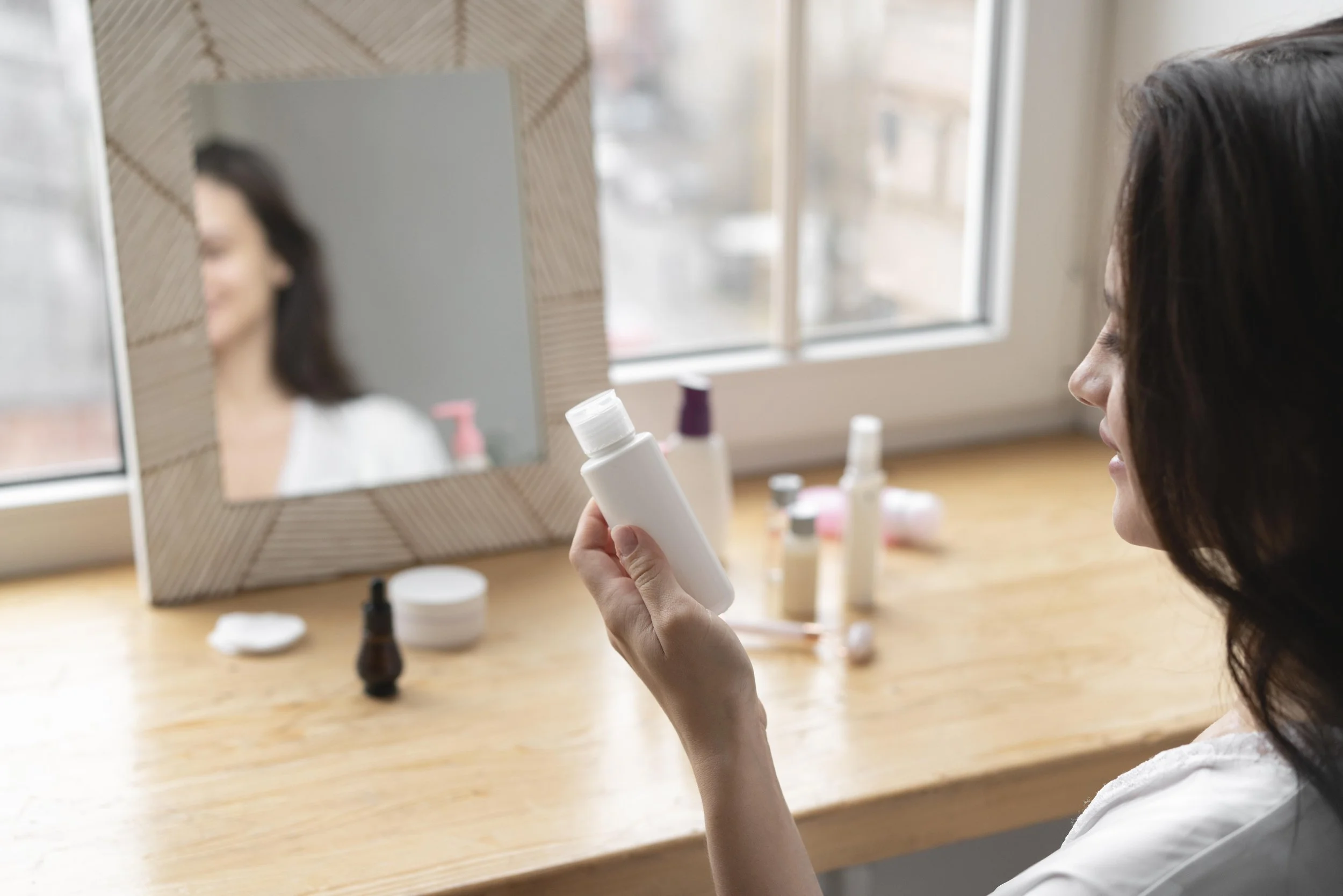
Walking through a beauty store or browsing skincare online can quickly become overwhelming. A product may highlight Dead Sea minerals, botanical oils, vitamins, patented technologies, or other premium-sounding ingredients, while the actual ingredient list tells a much more detailed story.
For ingredient-conscious Filipino shoppers, learning how to read mineral skincare labels can make beauty shopping easier and more informed. Instead of choosing a product simply because the packaging says "mineral-rich," you can look at what is actually in the formula, understand the difference between an ingredient fact and a marketing statement, and decide whether the product fits your routine.
Aqua Mineral is a useful example because its website provides product descriptions, ingredient information, directions, and dedicated information about its Dead Sea-based formulations. Its product pages show how individual products can combine Dead Sea minerals with oils, botanical extracts, vitamins, and proprietary cosmetic technologies.
Here is what to look for before clicking "add to cart."
What Does "Mineral Skincare" Actually Mean?
Mineral skincare is a broad term rather than a single type of formula.
A product marketed as mineral skincare may contain ingredients derived from mineral-rich water, mineral salts, clays, mud, or individual mineral compounds. In the case of Dead Sea skincare, the ingredient story often centers on the mineral-rich water, salts, or mud associated with the Dead Sea.
Aqua Mineral, for example, describes its skincare philosophy around Dead Sea minerals and combines them with other cosmetic ingredients and proprietary technologies. Its brand information identifies Dead Sea minerals alongside technologies such as Renovage™, Resistem™, and Tightenex™.
The important lesson is that "mineral skincare" does not mean the product contains only minerals.
A facial cream may contain mineral salts alongside plant oils, botanical extracts, moisturizers, vitamins, and other functional ingredients. The complete formula determines the product's characteristics.
Ingredient List vs. Marketing Copy
One of the most important skills in how to read mineral skincare labels is knowing the difference between what a label tells you about the formula and what the marketing language tells you about the product.
Ingredient information
This answers:
"What is actually in the product?"
For example, Aqua Mineral's Optima Day Cream for normal-to-dry skin identifies ingredients such as grape seed oil, calendula oil, olive oil, shea butter, pomegranate extract, chamomile extract, aloe vera, and Maris Sal, identified on the product page as Dead Sea salt.
These are ingredient facts presented as part of the product information.
Marketing language
This answers:
"How does the brand want me to think about the product?"
Words such as:
Premium
Revitalizing
Rejuvenating
Miracle
Intensive
Youthful
Luxury
Advanced
can describe a product's positioning or intended experience, but they do not replace an ingredient list.
This distinction does not mean marketing language is useless. It simply means shoppers should know what kind of information they are reading.
Start With the Full Ingredient List
When shopping online, it is easy to focus on the large headline ingredient.
You might see:
Dead Sea Minerals
or:
24K Gold
or:
Hyaluronic Acid
and immediately assume that the highlighted ingredient explains everything about the product.
It does not.
Look for the complete ingredient information whenever it is available.
For example, Aqua Mineral's Optima Day Cream for normal-to-oily skin lists Dead Sea minerals and Dunaliella algae alongside grape seed oil, calendula oil, olive oil, shea butter, pomegranate and chamomile extracts, aloe vera, rose hip oil, evening primrose oil, and honey.
This tells you much more about the formula than the phrase "Dead Sea minerals" alone.
A useful shopping habit
Before buying, ask:
What else is in the formula?
That one question can help you understand the product more realistically.
Learn the Names Behind Dead Sea Minerals
If you are specifically interested in Dead Sea minerals, do not assume that every label will simply say "Dead Sea minerals."
You may encounter terms such as:
Dead Sea salt
Dead Sea water
Dead Sea mud
Maris Sal
Mineral salts
These terms can refer to different types of raw materials or formulations.
For example, Aqua Mineral identifies Maris Sal as Dead Sea salt on some of its product pages. Its Optima Day Cream lists "MARIS SAL - DEAD SEA SALT" among the highlighted ingredients.
This is useful when shopping because an ingredient may appear under a more technical or standardized name rather than the marketing phrase used on the front of the packaging.
What Is Maris Sal?
Maris Sal is the INCI name commonly used for sea salt in cosmetic ingredient listings.
When Aqua Mineral identifies Maris Sal specifically as Dead Sea salt on its product page, it provides additional context about the source it associates with the ingredient.
For shoppers, the lesson is simple:
Do not assume a technical ingredient name is a completely different ingredient just because it looks unfamiliar.
If you encounter an ingredient you do not recognize, look for the brand's ingredient glossary or product information before making assumptions.
Understand the Difference Between an Ingredient and a Claim
This is particularly important when shopping for skincare online.
An ingredient can be objectively listed in a formula.
A claim describes what the brand says the formula or product can do.
For example:
Ingredient fact:
A product contains Dead Sea salt.
Product claim:
The brand says the product helps maintain a smoother or more radiant-looking complexion.
These are different types of information.
Aqua Mineral's product pages demonstrate this distinction. Its Optima Day Cream lists specific ingredients and separately describes the intended cosmetic benefits and directions for use.
As a shopper, you should consider both—but do not confuse them.
Be Careful With "Scientifically Proven"
"Scientifically proven" can sound impressive, but it is worth asking:
Proven to do what?
A product page may discuss research behind an ingredient, proprietary technology, or cosmetic formulation. That does not necessarily mean every possible claim associated with the product has been independently established.
Aqua Mineral's brand and ingredient pages discuss research and development behind technologies such as Renovage™, Resistem™, and Tightenex™.
The practical lesson is to look for the specific claim being supported.
For example:
Is the research about the ingredient?
Is it about proprietary technology?
Is it about the finished product?
Was it tested on people?
What outcome was measured?
How was the product used?
The more specific the evidence, the more useful it is for evaluating the claim.
How to Read Proprietary Ingredient Names
Another common feature of modern skincare labels is the proprietary ingredient or technology name.
Aqua Mineral uses names including Renovage™, Resistem™, and Tightenex™ across its product information.
A proprietary name can make a formulation sound complicated, but the useful question is:
What is this technology actually made from?
Aqua Mineral provides additional information about its technologies. For example, the brand describes Tightenex™ as a blend involving wheat proteins and sea algae.
This is much more informative than seeing only the trademarked name.
When shopping, look for supporting descriptions that tell you what the technology contains and what function the brand assigns to it.
Look at the Product Directions
Ingredients tell you what is in the product.
Directions tell you how the product is intended to be used.
Both are important.
For example, Aqua Mineral's Optima Day Cream instructs users to apply it daily to cleansed, dry facial and neck skin and massage until fully absorbed.
Its Miracle Serum Capsules provide more specific instructions: the capsule is opened, the serum is applied to cleansed, dry facial and neck skin, and the product is recommended as a 30-day nightly regimen. The page also states that it is for external use only, should be kept away from the eyes, and should be discontinued if irritation occurs.
This information can be just as important as the ingredient list.
Don't Assume More Ingredients Means Better Skincare
A long ingredient list is not automatically better than a short one.
A formula with many ingredients may contain several components serving different functions, while a simpler formula may be designed around only a few key ingredients.
The important questions are:
What is the product intended to do?
Are the ingredients appropriate for that purpose?
Do you recognize or understand the key ingredients?
Are there ingredients you personally avoid?
Does the product fit your existing routine?
Are the directions realistic for you?
Aqua Mineral's products illustrate why it is useful to look at the entire formula. Its facial products can combine Dead Sea-derived ingredients with oils, botanical extracts, vitamins, algae, and proprietary technologies.
Understand What "Natural" Does and Doesn't Mean
Another common beauty-shopping phrase is natural ingredients.
Natural ingredients can certainly be useful cosmetic ingredients, but "natural" is not automatically synonymous with:
Safer
More effective
Better for every skin type
Non-irritating
Clinically proven
For example, Aqua Mineral's ingredient information includes numerous naturally derived or botanical ingredients, including borage oil, avocado oil, evening primrose oil, calendula, chamomile, rose hip oil, shea butter, jojoba oil, and argan oil.
A shopper who is ingredient-conscious should still consider the complete formula and personal sensitivities rather than assuming that an ingredient is suitable simply because it comes from a plant.
Check for Ingredients You Know You Avoid
If you have previously experienced sensitivity to a particular ingredient, checking the ingredient list before purchasing can save you from an unnecessary trial-and-error experience.
Look beyond the product's headline ingredient.
For example, a mineral-focused moisturizer may also contain:
Botanical extracts
Plant oils
Fragrance components
Preservatives
Emulsifiers
Other active ingredients
Aqua Mineral publishes an ingredient overview that lists a range of natural ingredients used across its formulas.
If you have known allergies or sensitivities, use the full ingredient information rather than relying on the words "mineral," "natural," or "gentle."
Pay Attention to the Product Type
The same ingredient can appear in products designed for completely different purposes.
For example, Aqua Mineral's product range includes facial creams, serums, masks, peeling products, and body-care products.
Its Clarity Peeling Gel, for example, is designed as a facial exfoliating product and contains Dead Sea minerals alongside aloe vera, chamomile, Dunaliella algae, vitamin E, grape seed oil, and papaya extract. Its directions instruct users to massage a small amount onto dry facial and neck skin before rinsing.
That does not mean the product should be evaluated in the same way as a moisturizer simply because both contain Dead Sea minerals.
Product format matters.
A cleanser, serum, mask, moisturizer, and body scrub have different jobs.

Compare Ingredients Based on Function
Rather than simply collecting popular ingredients, try to understand what each one is doing in the formula.
Here is a simplified way to approach common skincare ingredients:
| Ingredient Type | What to Look For |
|---|---|
| Dead Sea salt/minerals | Mineral-focused formulation and product purpose |
| Hyaluronic acid | Moisture-focused skincare |
| Shea butter | Rich emollient and moisturizing feel |
| Jojoba oil | Conditioning and emollient properties |
| Vitamin E | Antioxidant and conditioning role |
| Aloe vera | Commonly used for soothing and moisturizing formulations |
| Botanical extracts | Identify the specific plant and its intended cosmetic role |
| Exfoliating acids | Check the specific acid and product directions |
The table is only a starting point. The concentration, formulation, pH, delivery system, and combination of ingredients can all influence how a finished product performs.
How Aqua Mineral Product Pages Can Help You Shop
When shopping online, use the product page as an information source rather than looking only at the product photo.
A useful Aqua Mineral product page can provide several pieces of information at once:
Product name
This tells you exactly which formulation you are considering.
Product description
This explains how the brand positions the product and its intended cosmetic use.
Ingredient information
This helps you identify the formula's highlighted components.
Directions
This tells you how the manufacturer expects the product to be used.
Warnings or cautions
Some product pages include additional usage precautions.
Related products
These can help you understand whether a product is designed to be paired with another step in the same routine.
For example, Aqua Mineral's Miracle Serum Capsules page provides the formula description, directions, recommended regimen, and caution information in one location.
This is exactly the type of information ingredient-conscious shoppers should look for before buying.
Example: Reading an Aqua Mineral Moisturizer Label
Consider the Aqua Mineral Optima Day Cream.
Instead of simply reading "Dead Sea skincare," break the product down.
Product type: Day cream.
Highlighted technology: Renovage™.
Mineral ingredient: Maris Sal, identified by Aqua Mineral as Dead Sea salt.
Other highlighted ingredients: Grape seed oil, calendula oil, olive oil, shea butter, pomegranate extract, chamomile extract, and aloe vera.
Directions: Apply daily to cleansed, dry facial and neck skin and massage until absorbed.
This gives you a much clearer picture of the product than simply knowing it is a Dead Sea mineral moisturizer.
Example: Reading a Premium Serum Label
Now consider the Aqua Mineral Miracle Serum Capsules.
The product description identifies Dead Sea water, hyaluronic acid, vitamin E, borage seed oil, sesame seed oil, and olive oil among its featured ingredients. The product is packaged in individual capsules and is recommended as a 30-day nightly regimen.
From a shopping perspective, you can immediately identify several things:
It is a serum, not a moisturizer.
It contains Dead Sea water, but that is not the only featured ingredient.
It contains moisturizing and conditioning ingredients, including hyaluronic acid and several oils.
It has a specific usage format, with individual capsules.
It has usage precautions, including avoiding contact with the eyes and discontinuing use if irritation occurs.
That is much more useful than choosing it simply because the word "Dead Sea" appears on the product page.
What Does "Premium" Actually Tell You?
"Premium" is primarily a positioning term.
It can communicate that a product is intended to occupy a higher-end segment, but it does not independently prove that the formula is more effective than every less expensive alternative.
Aqua Mineral has a dedicated Premium Collection featuring products such as Puffiness Eraser, Turn Back Time Serum Booster, Miracle Serum Capsules, Juveness De-Wrinkle Cream, Extensor Deep-Lifting Mask, Marvelle Rejuvenating Mask, and Defining Lift Neck Cream.
If you are considering a premium product, evaluate it based on the actual formula, intended use, product experience, and evidence supporting its claims—not simply the collection name.
How to Interpret "Anti-Aging" Claims
"Anti-aging" is another phrase that appears frequently in skincare.
When you see it on a product page, ask what the brand actually means.
It may refer to cosmetic goals such as:
Smoother-looking skin
More moisturized skin
A firmer-looking appearance
Reduced appearance of fine lines
Improved-looking texture
A more radiant complexion
These are different from medical claims about changing the biological aging process.
Aqua Mineral positions several of its products around anti-aging skincare and provides specific descriptions of the cosmetic effects it intends its formulas to provide.
Reading the actual product description helps you understand what the brand is promising rather than interpreting the phrase "anti-aging" as a guarantee of a particular result.
Don't Shop by One Hero Ingredient
This is perhaps the most useful rule for beauty shopping.
If a product says:
"Powered by Dead Sea minerals"
do not stop there.
Ask:
What else is in it?
If it says:
"Enriched with 24K gold"
ask:
What is the rest of the formula?
If it says:
"With hyaluronic acid"
ask:
What type of product is it, and how is it intended to be used?
Aqua Mineral's product pages demonstrate this multi-ingredient approach across its range. Its formulas can combine Dead Sea ingredients with plant oils, botanical extracts, vitamins, algae, and proprietary cosmetic technologies.
A hero ingredient can be interesting, but the complete formula is what you are actually buying.

A Quick Checklist Before Buying Mineral Skincare
Before purchasing a mineral-based skincare product, ask yourself:
1. What is the product?
Is it a cleanser, serum, cream, mask, exfoliant, or body product?
2. What are the highlighted ingredients?
Look beyond the front label.
3. What is the full ingredient list?
Check the product page or packaging.
4. What does each major ingredient do?
Look for credible information rather than relying solely on marketing descriptions.
5. What are the actual cosmetic claims?
Distinguish appearance-focused claims from medical claims.
6. How should it be used?
Check frequency, application instructions, and precautions.
7. Does it contain anything you avoid?
Check for known allergens or personal sensitivities.
8. Does it fit your existing routine?
A great product can still be a poor choice if it duplicates something you already use or makes your routine unnecessarily complicated.
9. Is the price justified for you?
Consider the complete formula and experience rather than the prestige of one ingredient.
10. Can you verify the information?
Choose brands that provide accessible product and ingredient information.
What Ingredient-Conscious Shoppers Should Remember About Dead Sea Minerals
Dead Sea minerals can be an appealing component of skincare, particularly for consumers who enjoy mineral-focused and spa-inspired beauty products.
But the words Dead Sea minerals should be the beginning of your evaluation—not the end.
Look at whether the product contains Dead Sea salt, Dead Sea water, or Dead Sea mud. Then look at what else is in the formula.
Aqua Mineral's ingredient information identifies Dead Sea materials alongside ingredients such as Dunaliella salina, plant oils, botanical extracts, shea butter, vitamins, and proprietary cosmetic technologies.
This gives shoppers a useful example of why labels need to be read as a whole.
Final Thoughts: Read the Formula, Not Just the Front Label
Learning how to read mineral skincare labels does not require a chemistry degree.
Start with the basics:
Identify the product type.
Look at the complete ingredient information.
Learn the common names behind unfamiliar ingredients.
Separate ingredient facts from marketing language.
Read the actual cosmetic claims carefully.
Check the directions and cautions.
Consider the entire formulation rather than one hero ingredient.
Aqua Mineral's website provides a useful example of how consumers can research a product before buying. Its brand information, ingredient guide, and individual product pages provide information about Dead Sea ingredients, other formula components, proprietary technologies, intended uses, and directions.
For example, shoppers can examine products such as the Optima Day Cream, Miracle Serum Capsules, or Clarity Peeling Gel and see that Dead Sea-derived ingredients are part of broader formulations rather than isolated miracle ingredients.
The next time you shop for Dead Sea minerals or other mineral-based skincare, resist the urge to choose based only on the biggest words on the package.
Read the ingredients. Read the claims. Read the directions. Then decide whether the complete product makes sense for your skin and your routine.
That is the foundation of smarter, more ingredient-conscious beauty shopping.
