
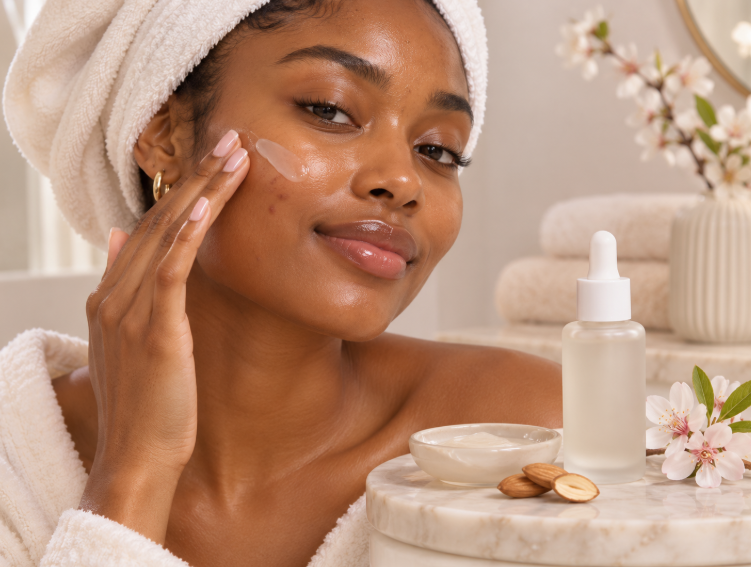
Struggling with stubborn breakouts, uneven skin tone, or dark spots that seem to stay long after your acne disappears?
Finding the right exfoliating ingredient can be challenging, especially when your skin is sensitive or prone to hyperpigmentation.
Some exfoliating acids may leave your skin feeling dry, irritated, or uncomfortable. Others may be too intense for your skin's needs.
That's where mandelic acid comes in.
Known for its relatively gentle exfoliating properties, mandelic acid has become a popular choice for people looking to improve acne, uneven texture, and post-acne marks. What makes it particularly interesting is its combination of exfoliating activity and potential antimicrobial effects.
From supporting clearer-looking skin to improving the appearance of discoloration, mandelic acid benefits make it an ingredient worth exploring. But is mandelic acid really suitable for acne-prone skin? Can it help with dark spots? And how does it compare with other exfoliating acids?
We'll explore how mandelic acid works, its benefits, recommended concentrations, and how to incorporate it into your skincare routine.
We'll also discuss how Botanifique can complement a gentle, balanced approach to skincare.
What Is Mandelic Acid?
Mandelic acid is an alpha hydroxy acid (AHA) originally derived from bitter almonds.
Today, it can also be produced through synthetic manufacturing processes. Like other AHAs, mandelic acid works by helping loosen the connections between dead skin cells on the skin's surface. This encourages exfoliation and can gradually improve the appearance of rough texture, clogged pores, and dullness. Mandelic acid has a molecular weight of approximately 152 daltons, making it larger than two commonly used AHAs: glycolic acid and lactic acid.
Its relatively large molecular size is one reason it is often associated with slower skin penetration and better tolerability. However, this doesn't mean mandelic acid is completely irritation-free. Its effects depend on concentration, formulation, pH, application frequency, and individual skin sensitivity.
Why Is Mandelic Acid Different?
Mandelic acid has both water-soluble and lipophilic characteristics.
Its aromatic chemical structure contributes to its affinity for lipid environments. This makes it an interesting ingredient for oily and acne-prone skin.
However, mandelic acid should not be considered equivalent to salicylic acid in its ability to penetrate oil-filled pores. Its main established cosmetic role remains exfoliation.
7 Mandelic Acid Benefits for Your Skin
Mandelic acid offers several benefits for people concerned about breakouts, uneven tone, and rough skin texture.
1. Gently Exfoliates Dead Skin Cells
One of the primary mandelic acid benefits is surface exfoliation.
Dead skin cells can accumulate and contribute to rough texture, dullness, and clogged pores. Mandelic acid helps encourage their removal. With consistent, appropriate use, skin may gradually feel smoother and appear more refined.
2. Helps Improve Acne-Prone Skin
Using mandelic acid for acne may help reduce surface buildup that contributes to clogged pores.
Mandelic acid has also demonstrated antimicrobial activity in certain laboratory settings. However, laboratory antimicrobial effects do not establish that a cosmetic mandelic acid serum can independently treat bacterial acne. Its acne-related benefits are better understood as a combination of exfoliation and potentially helpful effects on the skin environment. For persistent inflammatory acne, additional treatment may be necessary.
3. Improves the Appearance of Post-Acne Marks
After a breakout heals, some people develop lingering brown or grayish marks.
These marks are often caused by post-inflammatory hyperpigmentation, or PIH. Mandelic acid may help improve the appearance of superficial discoloration through gradual exfoliation.
However, it does not erase pigmentation overnight. Consistent sun protection is essential for preventing existing marks from becoming darker.
4. Supports Smoother Skin Texture
Uneven skin texture can result from dead skin cell buildup, clogged pores, and previous breakouts.
Mandelic acid encourages surface exfoliation, helping improve the appearance of roughness. Over time, skin may look smoother and more even.
5. May Be Better Tolerated by Sensitive Skin
Because mandelic acid has a relatively large molecular structure, it may be less irritating than some stronger exfoliating approaches.
This makes it a reasonable ingredient to consider for people who find other AHAs uncomfortable. However, sensitivity varies from person to person. A high-concentration mandelic acid product can still cause redness, burning, or peeling.
6. Helps Improve Dull-Looking Skin
When dead skin cells accumulate, the complexion may appear tired or uneven. Mandelic acid can help remove this surface buildup. With regular use, the skin may develop a fresher, brighter-looking appearance.
7. Offers Gentle Anti-Aging Support
Exfoliating ingredients can help improve the appearance of fine surface lines and uneven texture. Mandelic acid may contribute to a smoother-looking complexion through controlled exfoliation.
However, evidence for its anti-aging effects is less extensive than evidence for some other established treatments.It should not be expected to eliminate deep wrinkles or significantly tighten loose skin.
Why Mandelic Acid Is Popular for Dark Skin
Choosing an exfoliating ingredient can be especially important for people with medium to deep skin tones.
Darker skin contains more active melanin-producing systems, which can respond to inflammation by producing excess pigment. This may lead to post-inflammatory hyperpigmentation.
Understanding Post-Inflammatory Hyperpigmentation
PIH develops when inflammation or skin injury triggers increased pigment production.
Common triggers include acne, irritation, harsh skincare treatments, and aggressive exfoliation. The resulting dark marks may persist for weeks or months. For this reason, minimizing irritation is an important part of caring for pigmentation-prone skin.
Why Mandelic Acid May Be a Good Option
Research involving mandelic acid-containing chemical peels has suggested that certain formulations can be useful for acne and pigmentation concerns in darker skin types.
Some comparative studies have reported favorable tolerability, although results depend on the treatment and study design. This supports mandelic acid as a potentially useful option, but not as the universally safest AHA for every person with dark skin. The advantage is its potential for effective exfoliation with relatively manageable irritation when used appropriately.
How to Reduce the Risk of Dark Marks
If you're using mandelic acid for dark skin, follow a gradual approach.
Start with a lower concentration, avoid combining multiple exfoliants, and monitor your skin for irritation.
Use broad-spectrum sunscreen every morning. Most importantly, avoid continuing a product that causes persistent redness, burning, or inflammation.
Mandelic Acid for Acne: How Does It Work?
Acne develops through several processes, including excess sebum, abnormal follicular shedding, inflammation, and changes involving acne-associated bacteria. Mandelic acid may help address some of these concerns through exfoliation.
By encouraging the shedding of surface skin cells, it may reduce the buildup that contributes to clogged pores. Its potential antimicrobial activity has also attracted interest. However, mandelic acid should not be described as a guaranteed antibacterial acne treatment.
Who Might Benefit?
Mandelic acid may be worth considering if you experience:
Mild clogged pores or rough texture
Occasional breakouts
Post-acne discoloration
Oily skin with sensitivity to stronger exfoliants
Uneven skin tone following blemishes
If you have painful cystic acne, widespread inflammatory acne, or scarring, a cosmetic exfoliant alone is unlikely to be sufficient.
Mandelic Acid vs Salicylic Acid: Which Is Better for Acne?
Mandelic acid and salicylic acid are both used in exfoliating skincare, but they have different properties.
| Feature | Mandelic Acid | Salicylic Acid |
|---|---|---|
| Acid family | Alpha hydroxy acid (AHA) | Beta hydroxy acid (BHA) |
| Main action | Surface exfoliation | Exfoliation within oily follicles |
| Oil affinity | Some lipophilic characteristics | Strong lipid solubility |
| Acne benefits | May help clogged pores and texture | Well established for comedonal acne |
| Sensitive skin | Often relatively well tolerated | Depends on strength and formulation |
| Post-acne marks | May improve superficial discoloration | May help indirectly through acne control |
| Main consideration | Avoid overexfoliation | Can cause dryness and irritation |
Can You Use Both?
Some experienced users may tolerate mandelic acid and salicylic acid on alternating nights. However, combining exfoliating acids increases the possibility of irritation.
If you're new to chemical exfoliation, begin with one ingredient. There is no need to use both to achieve smoother-looking skin.
Mandelic Acid Concentration Guide
The concentration of mandelic acid can influence how strongly a product exfoliates. However, pH, formulation, and application frequency also matter.
5% Mandelic Acid: A Gentle Introduction
A 5% formulation may be suitable for beginners.
It can provide mild exfoliating activity, depending on the product. Start once or twice weekly and assess how your skin responds.
10% Mandelic Acid: Moderate Exfoliation
A 10% mandelic acid product may offer more noticeable exfoliation.
It is a common concentration in leave-on skincare. For sensitive or pigmentation-prone skin, beginning with one or two applications weekly is a reasonable approach. Daily use is not necessary for everyone.
15–25% Mandelic Acid: Stronger Treatments
Higher concentrations are more likely to cause irritation.
They should not automatically be treated as safe weekly home treatments. Products at these strengths may require professional assessment, depending on formulation and intended use. Avoid strong chemical peels if your skin is irritated, inflamed, or recovering from another treatment.
How to Choose the Best Mandelic Acid Serum
Finding the best mandelic acid serum means choosing a formula that matches your skin's needs. A product with a higher concentration is not necessarily more effective for your individual concerns.
Choose the Right Strength
If you're new to exfoliating acids, consider a lower concentration. More experienced users may tolerate stronger formulas. However, comfort and consistency should guide your decision.
Look for Hydrating Ingredients
Humectants such as hyaluronic acid and glycerin may help support hydration. These ingredients can make an exfoliating routine more comfortable. They do not eliminate the risk of irritation, so frequency still matters.
Consider Your Main Skin Concern
If your primary concern is acne, you may prefer a formula designed for oily or blemish-prone skin. If your concern is discoloration, look for a routine that combines gentle exfoliation with consistent sun protection.
Avoid Unnecessary Irritants
Strong fragrance, abrasive scrubs, and multiple exfoliating ingredients may increase irritation. A simple formula is often easier to introduce into a sensitive skincare routine.
Botanifique: Gentle Skincare for Acne-Prone and Uneven Skin
For acne-prone skin, the goal is not simply to remove as many dead skin cells as possible. It is to maintain a balanced routine that supports skin comfort while addressing blemishes and uneven texture.
Botanifique offers botanical-inspired skincare options for everyday facial care.
When exploring exfoliating products, an ingredient combination such as mandelic acid and azelaic acid may be of interest.
Mandelic acid provides exfoliating activity, while azelaic acid has established uses for acne and certain pigmentation concerns. However, combining two active ingredients can also increase irritation, depending on their concentrations and formulation.
A proposed Botanifique Mandelic + Azelaic Complex 10%/10% would need its formula, availability, and product claims verified before being recommended as an existing product.
How to Use Mandelic Acid in Your Skincare Routine
Introducing mandelic acid slowly helps you evaluate its effects without overwhelming your skin.
Step 1: Cleanse Gently
Begin with a mild cleanser that removes excess oil and impurities. Avoid harsh scrubbing.
Step 2: Apply Mandelic Acid
Use the product according to its instructions. For a leave-on serum, apply the recommended amount to clean, dry skin. Avoid the eyelids, lips, and broken or irritated areas.
Step 3: Follow With Moisturizer
A suitable moisturizer helps maintain hydration and support the skin barrier. This is particularly important if you're prone to dryness or irritation.
Step 4: Wear Sunscreen
Use broad-spectrum SPF 30 or higher every morning. Sun protection helps prevent pigmentation from worsening and supports the results of your skincare routine.
Step 5: Increase Frequency Gradually
Begin with once or twice a week. If your skin remains comfortable after several weeks, you may consider increasing frequency. Daily exfoliation is not required.
A Simple Mandelic Acid Routine for Acne-Prone Skin
A gentle routine can help address breakouts without introducing too many active ingredients.
Morning Routine
Gentle facial cleanser
Lightweight moisturizer
Broad-spectrum sunscreen
Evening Routine
Gentle facial cleanser
Mandelic acid serum on selected nights
Moisturizer
On nights when you don't use mandelic acid, focus on cleansing and hydration. If you're using prescription acne medication, check whether mandelic acid is appropriate before adding it.
Common Mandelic Acid Mistakes to Avoid
Even a relatively gentle exfoliant can cause irritation when used incorrectly.
Using it too frequently: Daily exfoliation may be excessive for sensitive skin.
Starting with a strong concentration: Higher percentages can increase irritation.
Combining multiple exfoliants: Layering several acids may disrupt the skin barrier.
Skipping sunscreen: UV exposure can worsen post-acne pigmentation.
Applying it to irritated skin: Exfoliation may intensify inflammation.
Expecting immediate results: Improvements in acne marks and uneven texture usually require time.
Frequently Asked Questions About Mandelic Acid
Is mandelic acid good for acne?
Mandelic acid may help improve clogged pores and uneven texture through exfoliation. However, persistent inflammatory acne may require additional treatment.
Is mandelic acid suitable for dark skin?
Mandelic acid may be a useful option for pigmentation-prone skin because it can be relatively well tolerated. However, no exfoliating acid is guaranteed to be irritation-free.
Can mandelic acid remove dark spots?
It may gradually improve the appearance of superficial post-acne marks. Deeper pigmentation can require more targeted care.
Can I use mandelic acid every day?
Some formulations are designed for frequent use, but daily application is not necessary for everyone. Start slowly and increase only if your skin tolerates it.
How long does mandelic acid take to work?
Some people notice smoother skin after several applications. Visible improvements in discoloration and acne-related concerns may take several weeks.
Is mandelic acid better than salicylic acid?
Neither ingredient is universally better. Mandelic acid may appeal to sensitive skin, while salicylic acid has more established evidence for treating clogged pores.
Final Thoughts: Gentle Exfoliation for Clearer-Looking Skin
Understanding mandelic acid benefits can help you build a more thoughtful skincare routine.
Mandelic acid offers surface exfoliation and may help improve rough texture, clogged pores, and the appearance of post-acne marks.
Its relatively gentle reputation makes it particularly interesting for individuals with sensitive or pigmentation-prone skin.
However, the right concentration and application frequency remain important. For darker skin tones, avoiding irritation is especially valuable because inflammation can contribute to lingering pigmentation.
A balanced routine should combine gentle exfoliation, adequate hydration, and consistent sun protection. With patience and the right approach, you can work toward smoother, clearer-looking skin without relying on aggressive treatments.
Safe Exfoliation for Dark Skin: Explore Botanifique
Healthy-looking skin begins with understanding what your skin needs. Whether you're concerned about occasional breakouts, uneven texture, or post-acne marks, a gentle skincare routine can make a difference.
Explore Botanifique's facial care collection to discover products that complement your everyday skincare goals.
Ready to refresh your skincare routine?
Explore Botanifique Skincare and discover options for your skin's needs.
Choose gentle care, stay consistent, and let your natural radiance shine through.
