
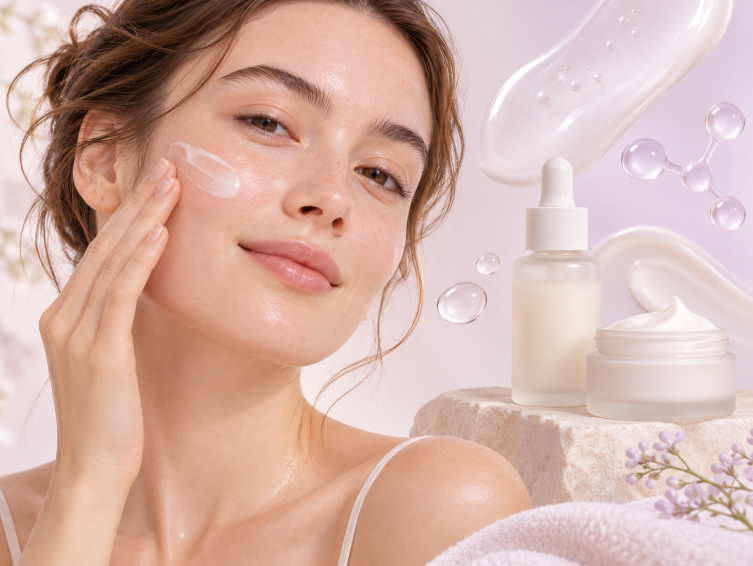
Want smoother, brighter-looking skin but worried that exfoliating acids might leave your face dry, red, or irritated?
You're not alone.
For women with sensitive or dry skin, exfoliation can feel like a challenge. While removing dead skin cells can improve the appearance of dullness and uneven texture, choosing an exfoliant that's too strong may leave your skin feeling uncomfortable.
That's where lactic acid comes in.
Known for its relatively gentle exfoliating properties, lactic acid is a popular choice for anyone who wants a smoother complexion without relying on aggressive skincare treatments. From improving skin texture to supporting hydration, lactic acid benefits extend beyond simply removing dead skin cells.
But is lactic acid really suitable for sensitive skin? How does it compare with glycolic acid? And how often should you use it? We'll explore everything you need to know about lactic acid, including its benefits, ideal concentrations, and how to introduce it into your skincare routine.
We'll also discuss how Botanifique's botanical-inspired approach to skincare can complement a gentle exfoliation routine.
What Is Lactic Acid?
Lactic acid is an alpha hydroxy acid (AHA) commonly used in skincare to exfoliate the skin's surface.
Although it was historically associated with milk fermentation, lactic acid used in modern cosmetic products can also be produced through other fermentation processes. Its main function is to help loosen the connections between dead skin cells, allowing them to shed more easily.
This process can reveal smoother, fresher-looking skin underneath. Unlike harsh physical scrubs, lactic acid works through chemical exfoliation without requiring abrasive rubbing.
It is often considered one of the more approachable AHAs for beginners, particularly when formulated at an appropriate concentration and pH.
Why Is Lactic Acid Considered Gentle?
Lactic acid has a molecular weight of approximately 90 daltons, compared with glycolic acid's approximately 76 daltons. Because lactic acid is slightly larger, it may penetrate the skin differently.
This contributes to its reputation as a gentler exfoliating option. However, molecular size isn't the only factor that determines irritation.
Product concentration, pH, formulation, frequency of use, and individual skin sensitivity all influence how a product performs. Even a low-strength lactic acid product can cause irritation if used too frequently.
7 Lactic Acid Benefits for Your Skin
Lactic acid offers several cosmetic benefits, especially for people concerned about dryness, dullness, and uneven texture.
1. Gently Removes Dead Skin Cells
One of the most recognized lactic acid benefits is its ability to exfoliate the skin's surface.
As dead skin cells accumulate, the complexion may begin to look rough or uneven. Lactic acid helps loosen these surface cells, encouraging more even shedding. With appropriate use, skin may gradually feel softer and appear smoother.
2. Helps Improve Skin Hydration
Lactic acid is associated with the skin's natural moisturizing factor, a collection of substances that help maintain hydration. At suitable concentrations, lactic acid and its salts can contribute to moisture retention.
This makes lactic acid particularly interesting for dry skin. However, exfoliating lactic acid products can still cause dryness or irritation, especially at higher strengths.
For this reason, moisturizing care remains essential.
3. Brightens Dull-Looking Skin
Dead skin cell buildup can make the complexion appear tired or lackluster. By encouraging surface exfoliation, lactic acid may help improve the appearance of dullness.
Over time, the skin can look fresher and more radiant. Results depend on consistent, appropriate use rather than aggressive exfoliation.
4. Improves Uneven Skin Texture
Rough patches and uneven surface texture can affect how smooth your skin feels. Lactic acid helps exfoliate accumulated surface cells, gradually improving skin texture. It may be especially useful for people who experience mild roughness or dullness.
5. Supports the Appearance of More Even Skin Tone
Lactic acid may help improve the appearance of superficial discoloration by encouraging exfoliation. This can be beneficial for some types of post-inflammatory marks or uneven tone.
However, deeper pigmentation concerns may require additional approaches. Daily sun protection is particularly important when addressing dark spots.
6. May Support Skin Barrier Function
Research on certain lactic acid formulations suggests potential effects on skin hydration and barrier-related processes.
However, these findings do not mean every lactic acid serum increases ceramide production or repairs the skin barrier.
Overexfoliation can have the opposite effect, causing dryness and irritation. The goal is controlled exfoliation that your skin can comfortably tolerate.
7. Offers an Alternative to Stronger Exfoliation
For people who find glycolic acid uncomfortable, a suitably formulated lactic acid product may provide a more tolerable option. This is particularly relevant for exfoliation beginners and individuals with dry skin.
Still, gentler does not mean irritation-free. A gradual introduction is the safest way to evaluate your skin's response.
Lactic vs Glycolic Acid: What's the Difference?
Both lactic acid and glycolic acid belong to the AHA family.
They work by encouraging the shedding of surface skin cells, but they differ in molecular size and typical cosmetic characteristics.
| Feature | Lactic Acid | Glycolic Acid |
|---|---|---|
| Molecular weight | Approximately 90 Da | Approximately 76 Da |
| Exfoliation | Often relatively gentle | Can be more intensive |
| Hydration | Has humectant-related properties | Primarily used for exfoliation |
| Sensitive skin | May be better tolerated | May cause more irritation |
| Dry skin | Often a useful option | Requires careful moisturizing |
| Main benefits | Texture, dullness, hydration | Texture, dullness, photoaging |
| Beginner suitability | Often a reasonable starting choice | Depends on formulation |
Which Is Better for Sensitive Skin?
When comparing lactic vs glycolic acid, lactic acid is often a practical starting option for sensitive skin.
Its exfoliating properties can help improve texture while offering moisture-related benefits. However, the complete formula matters more than the acid name alone. A mild glycolic acid formula may be better tolerated than a strong lactic acid treatment..
Is Lactic Acid Good for Sensitive Skin?
Using lactic acid for sensitive skin can be beneficial when the product is formulated appropriately and introduced gradually. Sensitive skin often reacts more easily to fragrance, environmental changes, and strong active ingredients.
A lower-strength lactic acid product may help improve dullness without the intensity of some stronger exfoliating treatments. However, individuals with very reactive skin should proceed carefully.
Lactic Acid for Dry Skin
Dry skin may benefit from lactic acid's exfoliating and moisture-related properties. It can help remove surface buildup that contributes to rough texture.
But exfoliation alone is not enough. A suitable moisturizer helps maintain hydration and comfort after treatment.
Lactic Acid for Rosacea-Prone Skin
Rosacea-prone skin can be highly reactive. Although lactic acid is sometimes described as gentler than glycolic acid, it can still trigger stinging, flushing, or irritation. If you experience active redness or frequent flare-ups, exfoliating acids may not be appropriate. Avoid applying them to inflamed or compromised skin.
Lactic Acid for Exfoliation Beginners
If you're new to chemical exfoliation, lactic acid can be a reasonable ingredient to consider. Start with a lower concentration and use it infrequently.
Increase application only if your skin remains comfortable. Remember that successful exfoliation doesn't require visible peeling.
Lactic Acid Concentration Guide: 5%, 10%, or 15%?
Not all lactic acid products have the same strength. Concentration is important, but the product's pH and overall formulation also influence exfoliating activity.
5% Lactic Acid: A Beginner-Friendly Starting Point
A 5% lactic acid product may be suitable for individuals who are new to chemical exfoliation. It can provide mild surface exfoliation, depending on the formulation. Begin with once or twice weekly application rather than assuming daily use is necessary.
10% Lactic Acid: Moderate Exfoliation
A 10% lactic acid formula generally offers more noticeable exfoliating activity. It may be appropriate for experienced users who tolerate lower strengths well.
For sensitive skin, starting with one or two applications weekly may be more comfortable. There is no need to increase frequency if you're already achieving your desired results.
15% Lactic Acid and Above: Stronger Treatment
Higher-concentration lactic acid products may cause more significant irritation.
They are not automatically gentle simply because they contain lactic acid rather than glycolic acid. Stronger exfoliating products should be approached cautiously, especially by individuals with sensitive or dry skin.
How to Choose the Best Lactic Acid Serum
Finding the best lactic acid serum depends on your skin type, experience with exfoliation, and preferred formula. Instead of choosing a product based solely on the highest concentration, consider how well the complete formula supports your skin.
Look for a Suitable Concentration
Beginners may prefer a lower-strength product. Those already accustomed to AHAs may tolerate stronger formulations. However, a higher percentage does not automatically produce better long-term results.
Consider Hydrating Ingredients
A lactic acid serum containing humectants such as hyaluronic acid or glycerin may help support hydration.
These ingredients attract water and can improve the skin's moisture balance. However, they do not guarantee that an exfoliating formula will be non-irritating.
Avoid Unnecessary Irritants
If you have sensitive skin, consider fragrance-free or low-fragrance formulas. Avoid combining multiple strong exfoliants unless your skin has demonstrated good tolerance.
Prioritize Skin Comfort
The best serum is one you can use consistently without causing persistent irritation. If your skin feels uncomfortable, reduce the frequency or discontinue use.
Botanifique: A Gentle Approach to Exfoliation and Hydration
Exfoliation should be part of a balanced skincare routine rather than the only focus.
For individuals with dry or sensitive skin, maintaining hydration is just as important as improving texture. Botanifique emphasizes botanical-inspired facial care, making it a brand worth exploring when building a gentle routine.
When selecting a lactic acid product, a formula that combines exfoliating ingredients with humectants such as hyaluronic acid may be appealing. Hyaluronic acid helps attract water, while lactic acid encourages surface exfoliation.
Together, these ingredients can support the goals of smoother-looking and more hydrated skin, although individual results vary. A proposed Botanifique Lactic Renewal 10% + Hyaluronic serum would fit this ingredient concept, but its exact formulation and availability should be confirmed before publication.
How to Start Using Lactic Acid
Introducing lactic acid gradually can help minimize irritation.
A simple routine is often more effective than combining several exfoliating products at once.
Step 1: Patch Test
Before applying a new product to your entire face, test a small area according to the product instructions. Watch for excessive redness, itching, or discomfort.
Step 2: Begin Twice Weekly or Less
For many beginners, once or twice weekly application is a reasonable starting point. If your skin is especially sensitive, begin with once weekly.
Step 3: Apply After Cleansing
Use lactic acid on clean skin according to the product label. Avoid applying it to broken, irritated, or freshly shaved skin.
Step 4: Follow With Moisturizer
Moisturizing helps support the skin barrier after exfoliation. Choose a formula that feels comfortable and provides adequate hydration.
Step 5: Use Sunscreen Daily
AHAs can increase the skin's sensitivity to ultraviolet radiation. Apply broad-spectrum SPF 30 or higher during the day and reapply as needed.
Step 6: Increase Slowly
If your skin tolerates the product well after several weeks, you may consider increasing frequency. Daily exfoliation is not necessary for everyone.
Lactic Acid for Darker Skin Tones
People with medium to deep skin tones may be particularly concerned about post-inflammatory hyperpigmentation. Irritation can trigger or worsen dark marks in susceptible individuals.
Because lactic acid may be better tolerated than some stronger exfoliating approaches, it can be a reasonable option. However, lower irritation risk is not guaranteed.
A high-strength lactic acid formula can still cause inflammation and pigmentation changes. To reduce the likelihood of irritation, use a suitable concentration, avoid overexfoliation, and maintain consistent sun protection.
Common Lactic Acid Mistakes to Avoid
Even a relatively gentle exfoliant can cause problems when used incorrectly.
Using it too often: Frequent application may cause dryness, redness, or a damaged skin barrier.
Starting with a high concentration: Beginners may experience irritation when introducing strong formulas too quickly.
Combining too many exfoliants: Layering several exfoliating products can increase irritation.
Skipping moisturizer: Exfoliation should be balanced with adequate hydration.
Forgetting sunscreen: UV exposure can worsen pigmentation and undermine improvements in skin appearance.
Ignoring irritation: Persistent burning, redness, or peeling is a sign that your routine may need adjustment.
Frequently Asked Questions About Lactic Acid
Can I use lactic acid every day?
Some products are formulated for daily use, but daily application is not necessary for everyone. Sensitive skin may respond better to less frequent exfoliation.
Is lactic acid better than glycolic acid?
Neither ingredient is universally better. Lactic acid may be more comfortable for dry or sensitive skin, while glycolic acid may be suitable for individuals who tolerate stronger exfoliation.
Does lactic acid help with dark spots?
Lactic acid may gradually improve the appearance of some superficial pigmentation by encouraging exfoliation. Consistent sun protection remains essential.
Can lactic acid damage the skin barrier?
Yes. Overuse, high concentrations, or unsuitable formulations can cause irritation and disrupt the skin barrier.
How long does lactic acid take to work?
Some people notice smoother-feeling skin after a few applications. Visible changes in tone and texture may require several weeks of consistent use.
Can I use lactic acid with hyaluronic acid?
Yes. Hyaluronic acid can complement lactic acid by supporting hydration. However, it does not eliminate the possibility of exfoliation-related irritation.
Final Thoughts: Gentle Exfoliation Starts With Balance
Understanding lactic acid benefits can help you choose an exfoliation routine that supports your skin's needs.
Lactic acid offers a combination of surface exfoliation and moisture-related properties, making it particularly appealing for women with dry or sensitive skin. It may help improve dullness, uneven texture, and the appearance of superficial pigmentation.
However, even a gentle AHA requires thoughtful use. Start with an appropriate concentration, introduce it gradually, and prioritize hydration and sun protection.
For those exploring botanical-inspired skincare, Botanifique offers facial care options that can complement a simple, moisture-focused routine. The goal isn't to exfoliate more often. It's to achieve smoother, healthier-looking skin while keeping your skin comfortable.
Exfoliate Without Irritation: Discover Botanifique
Beautifully smooth skin doesn't have to come at the expense of comfort.
A thoughtful skincare routine combines gentle exfoliation, adequate hydration, and everyday protection.
Explore Botanifique's facial care collection to discover skincare options that complement your skin's needs.
Ready for smoother, more radiant-looking skin?
Explore Botanifique Skincare and discover products for your daily beauty routine.
Exfoliate gently. Hydrate consistently. Let your natural glow shine through.
