
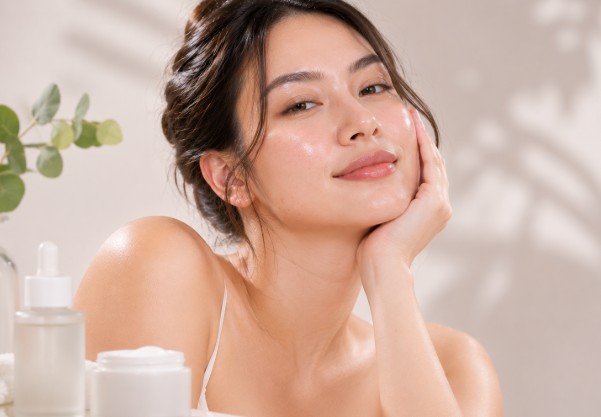
Want smoother, brighter-looking skin but find traditional exfoliating acids too harsh?
For women with sensitive skin, exfoliation can sometimes feel like a difficult choice. While removing dead skin cells can improve dullness and uneven texture, stronger exfoliating products may leave skin feeling dry, tight, or irritated.
That's where PHA skincare comes in.
Polyhydroxy acids, commonly known as PHAs, are exfoliating ingredients recognized for their relatively gentle action and moisture-attracting properties.
Unlike some traditional exfoliating acids, PHAs can help improve skin texture while supporting hydration. This makes them especially interesting for women who want the benefits of chemical exfoliation without an overly aggressive skincare routine.
But are PHAs really gentler than AHAs? Can they work for rosacea-prone skin? And what makes gluconolactone different from other exfoliating ingredients?
In this guide, we'll explore polyhydroxy acid skincare, the benefits of gluconolactone, and how to introduce PHAs into your routine.
What Are Polyhydroxy Acids (PHAs)?
Polyhydroxy acids are a group of exfoliating compounds used in skincare to improve the appearance of roughness, dullness, and uneven texture. Like alpha hydroxy acids (AHAs), PHAs help encourage the shedding of dead surface skin cells.
However, many PHAs have larger molecular structures than commonly used AHAs, which can contribute to slower skin penetration and improved tolerability. Two well-known ingredients in this category are gluconolactone and lactobionic acid.
Gluconolactone
Gluconolactone is a commonly used PHA that gradually converts to gluconic acid in aqueous environments. It is valued for its exfoliating, humectant, and antioxidant-related properties. Because it is generally considered milder than many conventional AHA treatments, gluconolactone is frequently included in products intended for sensitive skin.
Lactobionic Acid
Lactobionic acid is another PHA used in moisturizing and exfoliating skincare. Its relatively large molecular structure and multiple hydroxyl groups contribute to its water-binding properties. This makes it appealing for formulations designed to improve skin texture while maintaining hydration.
Why Are PHAs Considered Gentle?
The molecular characteristics of PHAs may limit how rapidly they penetrate the skin compared with some smaller AHAs. This can reduce the intensity of exfoliation and may improve tolerability. However, the complete formulation matters. A highly concentrated PHA product can still cause irritation, especially on compromised or reactive skin.
7 PHA Skincare Benefits for Sensitive Skin
Understanding the benefits of PHAs can help you determine whether they fit your skincare needs.
1. Provides Gentle Surface Exfoliation
One of the main benefits of PHA skincare is controlled surface exfoliation.
Dead skin cells naturally accumulate on the skin.
When they are not shed evenly, the complexion can appear dull or rough. PHAs help encourage the removal of these cells, gradually improving skin smoothness.
Because their exfoliating action is often milder than that of stronger AHA formulations, they may be suitable for individuals who struggle with traditional acids.
2. Helps Maintain Skin Hydration
PHAs contain multiple hydroxyl groups that contribute to their ability to attract and bind water.
This gives them humectant properties. Humectants help maintain moisture within the skin's outer layers.
For women with dry or sensitive skin, this combination of exfoliation and hydration can be particularly appealing. However, PHA products should still be paired with a suitable moisturizer.
3. Improves Dull-Looking Skin
Dead surface cells can make skin appear tired and uneven. PHAs help encourage gentle exfoliation, which may gradually improve the appearance of dullness. With consistent use, the complexion may look fresher and more radiant.
4. Supports Smoother Skin Texture
Rough patches and uneven surface texture can affect how skin looks and feels. By encouraging the removal of accumulated surface cells, PHAs may help improve smoothness. These changes generally develop gradually rather than overnight.
5. Offers Antioxidant-Related Benefits
Certain PHAs, including gluconolactone, have been investigated for antioxidant-related activity. Some can bind metal ions involved in oxidative reactions.
This process is known as chelation. Although these properties are scientifically interesting, they do not mean that every PHA serum provides clinically proven protection against environmental damage. Sunscreen remains essential for protecting skin from ultraviolet exposure.
6. May Be Better Tolerated by Reactive Skin
PHAs are often included in products designed for sensitive skin because they can provide relatively mild exfoliation. This makes them worth considering for individuals who experience discomfort with stronger AHAs. However, people with active rosacea, eczema, or an impaired skin barrier may still react to exfoliating ingredients.
7. Helps Support a Balanced Skincare Routine
One advantage of PHAs is that they can fit into a routine focused on both texture improvement and hydration. Instead of relying on aggressive exfoliation, users can introduce a suitable PHA product gradually. The goal is smoother-looking skin without unnecessary irritation.
Gluconolactone Benefits: Why This PHA Stands Out
Among the ingredients used in PHA skincare, gluconolactone is particularly popular. Its combination of exfoliating and humectant properties makes it useful in products designed for dry or sensitive skin.
Gentle Exfoliation
Gluconolactone can help encourage the shedding of dead surface skin cells. This may improve the appearance of roughness and dullness.
Hydration Support
Its moisture-attracting properties help support hydration in the skin's outer layers. This is especially useful for individuals whose skin feels dry after using conventional exfoliating products.
Antioxidant-Related Activity
Research has explored gluconolactone's ability to participate in antioxidant-related processes. However, the practical benefits depend on the product's formulation and concentration.
Sensitive Skin Compatibility
Gluconolactone is often considered relatively well tolerated. Nevertheless, a patch test and gradual introduction remain important.
These gluconolactone benefits make it an interesting ingredient for women who want gentle exfoliation as part of their everyday skincare routine.
PHA vs AHA vs BHA: What's the Difference?
PHAs, AHAs, and BHAs are all used in exfoliating skincare, but their properties differ.
| Feature | PHA | AHA | BHA |
|---|---|---|---|
| Common examples | Gluconolactone, lactobionic acid | Glycolic acid, lactic acid | Salicylic acid |
| Main action | Gentle surface exfoliation | Surface exfoliation | Exfoliation within oily follicles |
| Molecular characteristics | Often larger structures | Vary by acid | Lipid-soluble |
| Hydration | Strong humectant potential | Depends on ingredient | Less associated with humectancy |
| Sensitive skin | Often relatively well tolerated | Depends on formulation | May cause dryness |
| Acne-prone skin | May help surface texture | May help congestion | Established benefits for clogged pores |
| Irritation potential | Often lower | Varies | Varies |
| Sun protection | Still necessary | Still necessary | Still necessary |
PHA vs AHA: Which Is Better for Sensitive Skin?
When comparing PHA vs AHA, PHAs may be a more comfortable starting option for individuals with highly sensitive skin.
Their molecular characteristics and moisture-attracting properties can make them appealing for gentle exfoliation. However, they are not guaranteed to be irritation-free.
A mild AHA formulation may sometimes be better tolerated than a strong PHA product. The ideal choice depends on the complete formula and your skin's response.
Are PHAs Less Likely to Increase Sun Sensitivity?
Some research suggests that certain PHA formulations do not produce the same increase in UV sensitivity observed with some AHA treatments. However, this does not mean PHAs provide sun protection or that every formulation has been proven to have no photosensitizing effect. You can use a suitable PHA product in the morning if the label permits, but sunscreen remains necessary.
Who Should Consider PHA Skincare?
PHAs may appeal to several skin types and concerns.
Very Sensitive Skin
Women who experience irritation from stronger exfoliating products may prefer a carefully formulated PHA. Start with a low frequency and assess tolerance.
Dry Skin
Because PHAs have humectant properties, they may complement a moisture-focused routine. However, they should not replace moisturizer.
Rosacea-Prone Skin
Some individuals with stable, rosacea-prone skin may tolerate gentle PHA products. However, active flushing, burning, or inflammation can make exfoliation uncomfortable. Avoid applying acids during flare-ups.
Eczema-Prone Skin
If you experience eczema, maintaining the skin barrier should take priority over exfoliation. PHAs should not be applied to active eczema lesions or cracked skin. Even gentle exfoliants can worsen inflammation when the barrier is compromised.
Mature Skin
Women concerned about dullness, uneven texture, or early signs of aging may find PHAs useful. They can provide mild exfoliation without requiring an aggressive routine.
Can You Use PHAs After a Facial Peel or Laser Treatment?
PHAs are sometimes marketed as suitable for post-procedure skincare because of their relatively gentle properties. However, gentleness does not mean appropriate for freshly treated skin.
After laser treatments, chemical peels, or other procedures, the skin barrier may be temporarily compromised. Applying exfoliating acids too soon can increase irritation and interfere with recovery.
During the initial healing period, prioritize the aftercare instructions provided by your treatment professional.
Use only approved cleansing, moisturizing, and sun-protection products. Introduce PHAs again only when the skin has healed and your provider confirms that exfoliation is appropriate.
Are PHAs Safe During Pregnancy?
PHAs are sometimes described as pregnancy-friendly alternatives to stronger exfoliating acids. However, pregnancy-specific safety studies on ingredients such as gluconolactone and lactobionic acid remain limited.
Their generally low systemic exposure in conventional topical skincare may be reassuring, but this does not establish that PHAs are the safest exfoliating ingredients during pregnancy. If you're pregnant or planning pregnancy, review unfamiliar active skincare products with your healthcare professional.
Avoid strong chemical peels unless specifically recommended. A simple routine with gentle cleansing, moisturizer, and sunscreen may be sufficient during this period.
How to Choose the Best PHA Serum
Choosing a suitable PHA product involves more than looking at the concentration.
Check the PHA Ingredients
Look for gluconolactone, lactobionic acid, or other clearly identified PHAs. Different ingredients may offer different cosmetic characteristics.
Consider the Concentration
PHA products are available in a range of strengths. A higher concentration may produce more noticeable exfoliation but can also increase irritation. For very sensitive skin, a conservative starting approach is preferable.
Look for Hydrating Ingredients
Formulas containing glycerin, hyaluronic acid, or other humectants may help support hydration.
Avoid Unnecessary Irritants
If your skin is reactive, consider formulas without strong fragrance or multiple aggressive exfoliating ingredients.
Focus on Comfort
The best PHA product is one that suits your skin and can be used without persistent redness, stinging, or dryness.
Gentle Skincare for Sensitive Skin
Sensitive skin benefits from a thoughtful approach.
Instead of introducing several active ingredients at once, focus on gentle cleansing, hydration, and consistent protection. Botanifique offers botanical-inspired facial care options that can complement a simple skincare routine.
When considering exfoliating ingredients, a combination of gluconolactone and lactobionic acid may be appealing for its exfoliating and humectant properties.
However, even a PHA blend can cause irritation depending on its concentration and formulation. A proposed Botanifique PHA Gentle Renewal 10% serum would need its formulation and availability verified before being presented as a confirmed product.
How to Introduce PHA Into Your Routine
A gradual approach can help you assess how your skin responds.
Step 1: Begin With Gentle Cleansing
Wash your face using a mild cleanser.
Avoid harsh scrubbing or cleansing brushes.
Step 2: Apply PHA as Directed
Follow the instructions for your selected product.
Avoid the eye area, broken skin, and areas experiencing active irritation.
Step 3: Start Once or Twice Weekly
Even though PHAs are often considered gentle, daily exfoliation is not necessary for everyone.
Begin with a low frequency.
Step 4: Follow With Moisturizer
Apply a suitable moisturizer to maintain hydration and support the skin barrier.
Step 5: Use Sunscreen Daily
Finish your morning routine with broad-spectrum SPF 30 or higher.
Reapply as needed during outdoor exposure.
Step 6: Increase Gradually
If your skin remains comfortable after several weeks, you may consider increasing frequency.
If irritation develops, reduce use or discontinue the product.
Can You Use PHA and AHA Together?
Some experienced skincare users combine PHAs and AHAs in a routine. For example, they may use a PHA on selected mornings and an AHA on different evenings.
However, using multiple exfoliating acids increases the possibility of irritation. For very sensitive skin, combining them may defeat the purpose of choosing a gentler exfoliant.
Start with one exfoliating product. Only consider additional acids if your skin tolerates the existing routine well.
How Long Does PHA Take to Work?
PHAs generally provide gradual improvements rather than immediate dramatic changes.
Some people notice smoother-feeling skin after several applications. Changes in dullness and uneven texture may become more noticeable over several weeks.
An 8–12-week period may be useful for evaluating a consistent routine, but there is no established rule that PHAs always require 8–12 weeks while AHAs work within 4–6 weeks.
Results depend on the formulation, skin concern, and frequency of use. Patience is important, especially when your skin is sensitive.
Common PHA Skincare Mistakes to Avoid
Using too much product: Applying more than recommended may increase irritation.
Exfoliating every day immediately: Even gentle acids can be overused.
Combining multiple strong actives: Layering several exfoliating products may overwhelm sensitive skin.
Applying PHA to damaged skin: Wait until irritation or skin injury has healed.
Skipping moisturizer: Hydration remains essential even when using humectant exfoliants.
Forgetting sunscreen: UV protection is important regardless of the exfoliant you choose.
Frequently Asked Questions About PHA Skincare
Is PHA better than AHA for sensitive skin?
PHAs may be better tolerated by some people because of their molecular characteristics and humectant properties.
However, individual responses vary.
Can PHA help with acne?
PHAs may improve surface texture and mild congestion.
They are not a substitute for established acne treatments when breakouts are persistent.
Can I use PHA every day?
Some formulations are designed for frequent use, but daily application is not necessary for everyone.
Start slowly.
Is gluconolactone suitable for dry skin?
Gluconolactone has humectant properties and may be useful in moisturizing skincare formulations.
Can I use PHA with vitamin C?
These ingredients are not automatically incompatible.
However, combining multiple active products may cause irritation in sensitive skin.
Is PHA safe for rosacea?
Some people with stable rosacea-prone skin may tolerate PHAs.
Avoid exfoliation during active flare-ups and seek individualized advice if your skin is highly reactive.
Final Thoughts: Gentle Exfoliation Without Compromising Comfort
Understanding PHA skincare can help you choose an exfoliation approach that suits your skin's needs.
Polyhydroxy acids such as gluconolactone and lactobionic acid offer a combination of gentle surface exfoliation and moisture-attracting properties.
They may be particularly appealing for women with dry, mature, or sensitive skin who find stronger exfoliating acids uncomfortable.
However, no exfoliating ingredient is completely free from irritation risk.
The best routine is one that balances exfoliation, hydration, and daily protection.
With gradual introduction and consistent care, PHAs may help support smoother, brighter-looking skin without relying on aggressive treatments.
Discover Gentle Exfoliation With Botanifique
Your skin deserves care that prioritizes comfort. Whether you're experiencing dryness, dullness, or sensitivity, a simple skincare routine can help maintain a healthy-looking complexion.
Explore Botanifique's facial care collection to discover gentle cleansing and moisturizing options that complement your skincare goals.
Ready to refresh your skincare routine?
Explore Botanifique Skincare and find products suited to your skin's needs.
Exfoliate thoughtfully. Hydrate consistently. Reveal your natural glow.
