
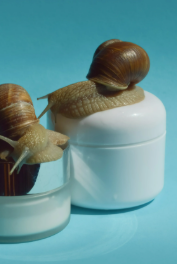
What if one of the most unusual skincare ingredients could help your skin feel softer, smoother, and more hydrated?
From viral skincare routines to the famous Korean glass-skin trend, snail mucin has become one of the most talked-about ingredients in beauty.
Its unusual origin might make you curious, but skincare enthusiasts are drawn to its potential benefits for dry skin, uneven texture, and post-acne care.
But does snail mucin actually work, or is it simply another beauty trend?
Known for its moisture-binding properties and potential skin-repairing activity, snail mucin has attracted scientific interest for both cosmetic and experimental medical applications.
However, not every viral claim is supported by strong clinical evidence.
In this guide, we'll explore the science behind snail mucin benefits, what research says about acne scars and skin aging, and how to incorporate this K-beauty favorite into your routine.
What Is Snail Mucin?
Snail mucin, also called snail secretion filtrate, is a processed ingredient derived from mucus produced by certain species of snails.
Snails naturally produce mucus to support movement, protect their bodies, and respond to environmental conditions.
In skincare manufacturing, collected secretions undergo processing and filtration before being incorporated into cosmetic formulas.
The finished ingredient is different from raw snail mucus.
It is typically included in serums, essences, and creams designed to support hydration and improve skin texture.
What Makes Snail Mucin Interesting?
Snail secretion is a complex mixture of substances that may include glycoproteins, glycosaminoglycans, peptides, and other compounds.
Certain snail secretions have also been reported to contain substances associated with skin care, including allantoin and small amounts of organic acids.
However, composition varies considerably depending on the snail species, collection method, and manufacturing process.
This means one snail mucin product may perform differently from another.
What's Inside Snail Mucin?
Understanding its components helps explain why this unusual ingredient has become popular.
Glycosaminoglycans: Moisture Support
Glycosaminoglycans are molecules associated with water binding and tissue structure.
They help explain the interest in snail mucin as a hydrating ingredient.
Some secretions contain hyaluronic-acid-related substances, although their exact amounts differ between preparations.
Allantoin: Skin Comfort
Allantoin is commonly used in skincare to support comfort and help protect irritated skin.
It has been identified among the components associated with certain snail-derived preparations.
However, not every product contains the same quantity.
Peptides and Proteins
Snail secretions contain proteins and peptides that have attracted research interest.
Some laboratory studies have reported effects on cells involved in skin repair.
These findings do not prove that every cosmetic serum stimulates collagen production.
Organic Acids
Certain snail secretions contain compounds such as glycolic acid.
However, the amount present in a finished product may be too small to deliver meaningful exfoliation.
Snail mucin should not automatically be treated as a chemical exfoliant.
7 Snail Mucin Benefits for Your Skin
Understanding snail mucin benefits can help you decide whether this ingredient deserves a place in your skincare routine.
1. Helps Maintain Skin Hydration
One of snail mucin's most appealing properties is its potential to support moisture retention.
Its water-binding components can contribute to a more hydrated skin feel.
This may be particularly useful for people whose skin feels tight or dehydrated.
However, the hydration a product provides depends on its complete formulation.
2. Supports a Smoother-Looking Complexion
Well-hydrated skin often appears softer and more supple.
Some clinical research involving snail-derived formulations has reported improvements in skin texture.
With consistent use, a suitable product may help the complexion appear smoother.
3. Has Potential Skin-Repairing Properties
Snail secretions have been studied for their effects on processes involved in skin repair.
Laboratory and preclinical studies suggest that certain preparations may support the activity and movement of cells involved in tissue recovery.
These findings are promising.
However, they do not establish that an ordinary cosmetic serum can heal open wounds or replace medical wound care.
4. May Improve the Appearance of Fine Lines
Skin dehydration can make fine lines more noticeable.
By supporting hydration, snail mucin products may temporarily improve the appearance of fine surface lines.
Small clinical studies have also investigated snail-derived ingredients for photoaged skin.
Results suggest potential benefits for texture and wrinkles, although larger studies are needed.
5. May Support the Skin Barrier
The skin barrier helps retain moisture and protect against environmental irritants.
Some clinical research involving snail-based skincare regimens has reported reduced transepidermal water loss, a measure related to barrier function.
However, these studies evaluated particular formulations.
They don't prove that every snail mucin product repairs the skin barrier.
6. May Complement Acne-Prone Skincare
Snail mucin is popular among people seeking hydration without a heavy skincare texture.
A randomized study involving a combination serum containing snail secretion filtrate and botanical extracts reported improvements in inflammatory mask-related acne lesions.
However, the study did not isolate snail mucin as the only active ingredient.
It should therefore be viewed as a potential supporting ingredient rather than an established acne treatment.
7. Offers an Additional Option for Sensitive Skin
Some people find snail mucin products comfortable because many are designed to emphasize hydration.
However, reactions can occur.
Snail-derived ingredients are not universally hypoallergenic, and no serum should be assumed suitable for every sensitive skin type.
Does Snail Mucin Really Work? What Science Says
The short answer is that snail mucin has promising properties, but the evidence is still developing.
Its moisturizing potential and effects on skin-related cells have scientific support.
Some small human studies have also reported improvements in visible signs of skin aging.
The 2013 Photoaging Study
A randomized, double-blind study published in the Journal of Drugs in Dermatology evaluated products containing snail secretion filtrate in 25 participants.
Researchers compared an active regimen with a placebo applied to the opposite side of the face.
After 12 weeks, the treated side showed improvements in certain wrinkle and texture measurements.
The findings were encouraging, but the study was small and evaluated specific products.
The 2022 Acne Study
Another randomized, placebo-controlled study followed 66 participants with mild-to-moderate mask-related acne.
After 12 weeks, the group using a combination serum containing snail secretion filtrate showed a greater reduction in inflammatory acne lesions.
However, the serum contained additional botanical ingredients, and several other measured skin outcomes did not differ significantly.
What Does This Mean?
Snail mucin is more than a completely unsupported beauty trend, but it's not a proven miracle ingredient.
Its benefits depend on formulation, skin type, and the concern being treated.
Snail Mucin for Acne Scars: Can It Really Help?
One of the most common questions is whether snail mucin for acne scars actually works.
The answer depends on what you mean by acne scars.
Not all marks left by breakouts are the same.
Post-Inflammatory Erythema (PIE)
PIE appears as lingering pink, red, or sometimes purple marks after inflammation.
These marks are primarily associated with vascular changes rather than excess pigment.
Hydrating skincare may support general skin comfort, but there is insufficient clinical evidence that snail mucin directly removes established PIE.
Post-Inflammatory Hyperpigmentation (PIH)
PIH appears as brown, gray, or dark marks following a breakout.
These marks develop through pigment-related processes.
Snail mucin may complement a gentle routine, but it is not an established treatment for fading PIH.
Consistent sunscreen and suitable pigmentation-focused ingredients are more directly relevant.
Atrophic Acne Scars
Atrophic scars are indented areas caused by changes in deeper skin structure.
Although some laboratory research suggests snail secretions may affect cells involved in tissue repair, there is no convincing evidence that an ordinary snail mucin serum can reverse established pitted scars.
What About Skin Texture?
A hydrating product may temporarily make skin appear plumper and smoother.
This can improve the appearance of mild surface irregularities.
However, improved hydration should not be confused with permanent scar remodeling.
The realistic expectation is hydration and possible texture support, not guaranteed acne scar removal.
Is Snail Mucin Good for Acne-Prone Skin?
Snail mucin may appeal to people with acne-prone skin who want extra hydration.
Some formulas are lightweight and can be incorporated into routines already containing acne treatments.
However, the ingredient itself does not guarantee that a product is non-comedogenic.
Can Snail Mucin Cause Breakouts?
Yes, some individuals report breakouts or irritation after trying snail mucin products.
This may reflect sensitivity to the complete formulation or individual skin responses.
If you develop persistent bumps, itching, or redness after introducing a new serum, discontinue it and reassess your routine.
Is It Suitable for Oily Skin?
Lightweight snail mucin essences may feel comfortable for oily or combination skin.
However, thicker formulations may be less appealing during hot and humid weather.
Choose the texture that works for your complexion.
Snail Mucin and the Skin Barrier
A healthy skin barrier helps keep moisture in and environmental irritants out.
When the barrier becomes compromised, skin may feel tight, dry, or unusually sensitive.
Hydrating products can support a routine focused on skin comfort.
Snail mucin may contribute to this approach through its moisture-binding properties.
However, a complete barrier-supporting routine should also include a suitable moisturizer.
If your skin is severely irritated, simplify your routine rather than introducing several new active ingredients.
Can You Use Snail Mucin After a Facial or Skin Treatment?
Snail-derived preparations have been investigated in skin-recovery research, including certain experimental and clinical applications.
However, this does not mean every cosmetic snail mucin serum is suitable for freshly treated skin.
After laser procedures, microneedling, or chemical peels, the skin may be temporarily more vulnerable to irritation.
Apply only products approved in your aftercare instructions.
Avoid introducing an unfamiliar snail mucin product to broken or freshly treated skin.
Once your skin has healed, a suitable hydrating essence may be considered as part of your normal routine.
How Is Snail Mucin Collected? Is It Cruelty-Free?
Snail mucin's unusual origin raises understandable questions about animal welfare.
Some producers collect mucus as snails move across specially designed surfaces or mesh.
Other extraction methods may involve mechanical or chemical stimulation.
Because practices vary, it would be inaccurate to claim that every snail mucin product is collected without stressing or harming snails.
Is Snail Mucin Vegan?
No.
Snail secretion filtrate is an animal-derived ingredient, so products containing it are not vegan.
Is the Finished Product Raw Snail Slime?
No.
Cosmetic snail secretion filtrate is processed before use.
Manufacturing methods may include filtration and other purification steps intended to prepare the ingredient for formulation.
This doesn't mean every product has identical quality controls.
What About the Texture?
Snail mucin products often have a slippery, stringy, or slightly sticky consistency.
Some absorb into a comfortable finish, while others may remain tacky.
The experience depends on the product and how much you apply.
How to Choose the Best Snail Mucin Product
Finding the best snail mucin product means looking beyond viral reviews.
1. Check the Ingredient List
Look for Snail Secretion Filtrate on the product label.
The ingredient's position can help you understand the formula, although it does not reveal the full composition of the filtrate itself.
2. Don't Focus Only on the Percentage
A product advertising a high percentage of snail secretion filtrate may sound impressive.
However, percentages alone don't reveal the amount of active compounds or guarantee superior results.
Processing, formulation, and stability matter.
3. Consider Supporting Hydrators
Ingredients such as glycerin and hyaluronic acid can complement snail mucin in a moisture-focused product.
A suitable moisturizer remains useful for maintaining hydration.
4. Match the Texture to Your Skin
Oily skin may prefer a lightweight essence.
Dry skin may benefit from a richer moisturizer layered over the essence.
5. Review Safety and Sourcing Claims
Look for clear product information and credible sourcing statements.
If ethical sourcing is important to you, choose brands that provide specific details rather than relying on vague cruelty-free claims.
A Gentle Approach to Hydration and Skin Comfort
A balanced skincare routine should support your skin's natural beauty without relying on aggressive treatments.
For women dealing with dehydration, uneven texture, or post-acne concerns, maintaining skin comfort is an important foundation.
Botanifique offers botanical-inspired facial care options that complement everyday cleansing and moisturizing routines.
When evaluating a snail mucin product, additional ingredients such as centella asiatica and peptides may be of interest.
Centella-derived compounds have been studied for soothing and skin-related effects, while certain peptides are used in cosmetic formulations for skin-conditioning purposes.
However, combining these ingredients does not automatically prove faster wound healing or superior scar repair.
The finished formulation must be evaluated on its own merits.
How to Use Snail Mucin in Your Skincare Routine
Snail mucin products can often be used in the morning or evening, depending on their instructions.
Morning Routine
Step 1: Gentle Cleanser
Start by washing your face with a suitable cleanser.
Avoid harsh scrubbing.
Step 2: Toner (Optional)
Apply a hydrating toner if it is already part of your routine.
Toner is not essential for everyone.
Step 3: Snail Mucin Essence
Apply the recommended amount, often one or two pumps depending on the product.
Gently spread or pat the essence onto your skin.
Step 4: Moisturizer
Follow with a moisturizer suited to your skin type.
Step 5: Sunscreen
Finish with broad-spectrum SPF 30 or higher.
Evening Routine
Remove makeup and sunscreen.
Cleanse gently.
Apply your snail mucin product as directed.
Follow with moisturizer.
You don't need to wait exactly 30 seconds between steps.
Allow the product to settle comfortably before continuing.
Can You Combine Snail Mucin With Other Skincare Ingredients?
Snail mucin can often fit into routines containing other hydrating ingredients.
With Hyaluronic Acid
These ingredients may complement each other in a hydration-focused routine.
However, using both is optional rather than necessary.
With Glycerin
Glycerin is a well-established humectant.
It may help enhance the moisturizing feel of the complete formula.
With Niacinamide
Niacinamide may support barrier function and improve the appearance of uneven skin tone.
It can be incorporated alongside snail mucin when the formulas are compatible.
With Retinoids
A suitable moisturizing product may help support comfort during a retinoid routine.
However, snail mucin has not been proven to prevent retinoid irritation.
Follow the directions for your retinoid and avoid excessive layering if your skin is sensitive.
Are There Vegan Alternatives to Snail Mucin?
If you prefer animal-free skincare, several ingredients can provide some similar cosmetic functions.
Mushroom-Derived Ingredients
Some mushroom extracts contain polysaccharides with moisture-binding properties.
Their effects depend on the species and formulation.
Synthetic Peptides
Selected synthetic peptides are used in skincare for conditioning and anti-aging-related purposes.
However, their functions vary considerably.
Hyaluronic Acid
Hyaluronic acid is widely used to attract and retain water.
It is a practical option for people whose main goal is hydration.
These alternatives can support a similar skincare goal, but they are not chemically identical to snail secretion filtrate.
How Long Does Snail Mucin Take to Work?
Some people notice improved skin softness or hydration soon after application.
More gradual changes in appearance may require several weeks.
Small clinical studies of specific snail-derived skincare regimens have assessed outcomes over approximately 8–12 weeks.
However, this is not a proven timeline for fading acne scars.
If your main concern is established scarring or persistent pigmentation, don't assume that continued use will eventually remove it.
Common Snail Mucin Mistakes to Avoid
Expecting it to erase acne scars: Its scar-remodeling effects are not well established.
Assuming it cannot clog pores: Tolerability depends on the complete formula.
Skipping moisturizer: A hydrating essence may not provide enough moisture retention on its own.
Applying it to fresh wounds: Cosmetic products aren't substitutes for appropriate wound care.
Ignoring allergic reactions: Stop using products that trigger persistent itching, redness, or swelling.
Believing every sourcing claim: Collection practices vary between manufacturers.
Frequently Asked Questions About Snail Mucin
Does snail mucin work for skin?
Research suggests potential hydration, texture, and skin-conditioning benefits. However, clinical evidence remains limited for many popular claims.
Is snail mucin good for acne scars?
It may improve the appearance of dehydrated skin, but evidence that it removes established acne scars is insufficient.
Can snail mucin help with redness?
Some formulations may support skin comfort, but direct evidence for clearing persistent post-acne redness is limited.
Is snail mucin suitable for sensitive skin?
Some people tolerate it well, while others experience irritation or allergic reactions.
Patch test new products before widespread use.
Can I use snail mucin every day?
Many cosmetic formulations are designed for daily use.
Follow the specific product's directions.
Is snail mucin safe for people with dust mite allergies?
Research has documented cross-reactivity between snail allergens and house dust mites, particularly in the context of snail ingestion.
This does not prove that topical snail mucin causes reactions in everyone with dust mite allergies.
However, people with known snail allergies or significant related sensitivities should exercise caution and seek individualized guidance.
Final Thoughts: Is Snail Mucin Worth the Hype?
So, does snail mucin work, or is it just another K-beauty trend?
The available research suggests that snail-derived ingredients have interesting moisturizing and skin-related properties.
Small human studies have reported improvements in texture, fine lines, and certain other outcomes when using specific snail-based formulations.
However, evidence for dramatic scar removal, guaranteed wound healing, and collagen regeneration remains limited.
For women seeking additional hydration, snail mucin may be worth exploring in a suitable skincare formula.
The key is maintaining realistic expectations.
A thoughtful routine that combines gentle cleansing, hydration, moisturizing, and daily sun protection remains the foundation of healthy-looking skin.
Support Your Skin's Natural Recovery With Botanifique
Beautiful skin deserves care that prioritizes hydration and comfort.
Whether you're concerned about dryness, uneven texture, or post-acne skin appearance, maintaining a balanced routine can make a difference.
Discover Botanifique's facial care collection and explore options that complement your everyday skincare goals.
Ready to refresh your routine?
Explore Botanifique Skincare and find products suited to your skin's needs.
Hydrate gently. Care consistently. Let your natural radiance shine through.
