
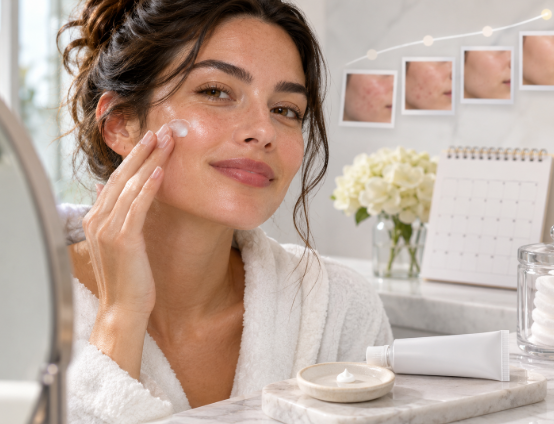
Thinking about adding tretinoin to your skincare routine but worried about peeling, purging, or irritation?
You're not alone.
Tretinoin has earned a reputation as one of the most extensively researched skincare treatments for acne, fine lines, and sun-damaged skin. However, achieving noticeable improvements requires more than simply applying a prescription cream every night.
Understanding how to use tretinoin correctly can make a significant difference in your experience. From choosing the right concentration to managing the dreaded tretinoin purge, knowing what to expect can help you build a routine that supports your skin throughout the adjustment period.
In this complete guide, we'll explore how tretinoin works, when results typically appear, how to minimize irritation, and why gentle skincare products from Aqua Mineral may complement your prescription treatment. Whether you're beginning your first prescription or considering tretinoin for long-term anti-aging care, here's what you should know before getting started.
What Is Tretinoin?
Tretinoin, also called all-trans retinoic acid, is a vitamin A derivative used in dermatology.
It belongs to a group of medications known as retinoids, which influence skin cell development and renewal. Unlike cosmetic retinol, tretinoin is already in its biologically active form. This means it does not need to undergo the same conversion steps before interacting with retinoic acid receptors in the skin.
Tretinoin is commonly prescribed for acne and, in certain formulations, the appearance of fine wrinkles and other signs of photodamage. It is frequently described as a gold-standard topical retinoid because its effectiveness has been supported by decades of clinical research.
Common Tretinoin Strengths
Tretinoin is available in several concentrations, depending on the formulation and market.
Common strengths include:
0.025%: A lower concentration often considered for beginners.
0.05%: A commonly prescribed concentration for acne and photoaging.
0.1%: A higher concentration that may be appropriate for selected patients under medical supervision.
Higher concentrations are not automatically better.
They may cause more irritation, especially during the first several weeks. For many beginners, consistent use of a lower strength is preferable to repeatedly stopping a stronger product because of discomfort.
How Does Tretinoin Work?
Tretinoin interacts with retinoic acid receptors in skin cells.
These receptors influence gene expression and processes involved in skin cell differentiation, turnover, and the maintenance of normal skin structure.
By affecting these processes, tretinoin can help reduce the formation of clogged pores and improve certain visible signs of photodamage. It also influences pathways associated with collagen production and collagen breakdown in photoaged skin.
However, its effects develop gradually. Although tretinoin is already an active retinoid, this does not mean it produces immediate visible results.
Tretinoin vs Retinol: What's the Difference?
Retinol is a cosmetic vitamin A derivative that must be converted within the skin to retinaldehyde and then retinoic acid. Tretinoin is retinoic acid itself.
Because tretinoin does not require those conversion steps, it generally has stronger clinical evidence for treating acne and photoaging. However, it also has a greater potential to cause dryness, redness, and peeling.
Retinol may be a more comfortable starting point for some people, while prescription tretinoin may be appropriate for those seeking treatment for specific concerns. The right choice depends on your skin condition, goals, and tolerance.
What Are the Benefits of Tretinoin?
Tretinoin is used for several skin concerns, particularly acne and signs of sun damage.
1. Helps Treat Acne
Tretinoin helps normalize the shedding of cells within hair follicles. This reduces the formation of microcomedones, which can eventually develop into whiteheads and blackheads. It is particularly useful for comedonal acne and may also be included in treatment plans for inflammatory acne. For moderate or severe inflammatory acne, a dermatologist may recommend combining tretinoin with other appropriate acne medications.
2. Improves the Appearance of Fine Lines
With consistent use, tretinoin can help improve the appearance of fine wrinkles associated with sun exposure. It influences collagen-related processes in the skin and can support gradual improvements in texture. These changes typically take several months. Deep wrinkles and significant skin laxity are unlikely to disappear with tretinoin alone.
3. Supports Smoother-Looking Skin
Uneven texture can result from clogged pores, accumulated surface cells, and photodamage. Tretinoin may gradually improve the appearance of roughness and uneven texture. However, initial dryness and peeling can temporarily make skin look less smooth.
4. Helps Improve Uneven Pigmentation
Tretinoin may improve some forms of mottled hyperpigmentation associated with sun damage. It can also be part of dermatologist-directed treatment plans for post-inflammatory pigmentation. For melasma, tretinoin is sometimes used in combination prescription therapies rather than as a guaranteed standalone solution.
5. Addresses Certain Signs of Photodamage
Long-term ultraviolet exposure contributes to fine lines, uneven pigmentation, and changes in skin texture. Tretinoin can improve some visible signs of photodamage.
However, it cannot reverse every effect of ultraviolet exposure or replace sunscreen. Daily sun protection remains essential.
How to Use Tretinoin: A Beginner-Friendly Guide
Starting tretinoin requires patience. Using too much product or applying it too frequently can increase irritation without necessarily producing better results.
The following schedule is an example of a conservative introduction, not a universal prescription.
Step 1: Get a Prescription
Before using tretinoin, consult a licensed dermatologist or other qualified prescribing clinician. They can assess your skin condition, determine whether tretinoin is appropriate, and select the right formulation. Be sure to disclose any history of eczema, rosacea, allergies, pregnancy, or pregnancy planning.
Step 2: Begin With a Suitable Strength
For some beginners, a clinician may recommend a lower concentration such as 0.025%. The best concentration depends on your skin's sensitivity and the condition being treated. Cream, gel, and lotion formulations can also feel different on the skin. A higher percentage is not necessarily required to achieve meaningful results.
Step 3: Introduce Tretinoin Gradually
If your prescriber agrees, a gradual schedule may help your skin adjust.
| Period | Example frequency | Main goal |
|---|---|---|
| Weeks 1–4 | Twice weekly | Assess tolerance |
| Weeks 5–8 | Three nights weekly | Gradually increase use |
| Weeks 9–12 | Every other night if tolerated | Build consistency |
| After Week 12 | Nightly only if appropriate | Maintain treatment |
If irritation develops, your dermatologist may recommend staying at a lower frequency for longer. Some people achieve good results without using tretinoin every night.
Consistency matters more than rushing toward nightly application.
Step 4: Use a Pea-Sized Amount
For many facial tretinoin formulations, a pea-sized amount is sufficient for the entire face. Apply a thin layer as directed.
Using more than recommended will not necessarily accelerate results. Instead, it can increase dryness, burning, and peeling. Avoid the eyelids, corners of the nose, lips, and other sensitive areas unless your clinician specifically instructs otherwise.
Step 5: Apply to Dry Skin
Wash your face with a gentle cleanser and pat it dry. Applying tretinoin to damp skin may increase irritation for some people. If necessary, allow your skin to dry completely before application. A fixed 20-minute waiting period is not universally required.
Follow the instructions for your specific prescription formulation.
The Tretinoin Sandwich Method: How It Works
The moisturizer sandwich method is a popular technique for reducing irritation during the early stages of tretinoin use.
It involves applying moisturizer before and after tretinoin.
How to Do the Sandwich Method
Cleanse your face and allow your skin to dry.
Apply a thin layer of a suitable moisturizer.
Allow the moisturizer to settle.
Apply your prescribed amount of tretinoin.
Finish with another light layer of moisturizer if needed.
This approach may improve comfort for people who experience dryness or sensitivity. However, it is not necessary for everyone, and the ideal application order can depend on the formulation.
Why Moisturizer Matters
Tretinoin can temporarily disrupt the skin's barrier function during the adjustment period. This may increase water loss and make skin feel tight or uncomfortable.
A gentle moisturizer helps maintain hydration and supports skin barrier function. For a complementary skincare routine, explore Aqua Mineral skincare and choose a suitable moisturizing formula based on its current ingredient list.
What Is the Tretinoin Purge?
One of the biggest concerns for beginners is the tretinoin purge.
Purging refers to a temporary increase in acne-like breakouts that some people notice after starting treatments that influence follicular cell turnover.
Tretinoin may bring previously developing clogged pores to the surface more quickly. However, not everyone experiences purging.
And importantly, not every breakout after starting tretinoin is a purge. Irritation, contact dermatitis, unsuitable accompanying products, or ordinary acne fluctuations may also contribute.
How Long Does the Tretinoin Purge Last?
There is no scientifically established purge schedule that applies to everyone. Some people notice temporary worsening during the first several weeks. Others experience no worsening at all.
Here is a general timeline of what some users may experience.
| Timeline | What you might notice |
|---|---|
| Week 1 | Dryness, tightness, or no noticeable change |
| Weeks 2–4 | Possible breakouts or irritation |
| Weeks 4–6 | Continued adjustment; some people notice worsening acne |
| Weeks 6–8 | Early improvements may begin |
| Weeks 8–12 | Acne improvement becomes more assessable |
| After 12 weeks | Further progress with continued treatment |
The commonly repeated claim that purging always peaks at week four is not supported by a universal clinical rule.
Likewise, purging is not guaranteed to resolve by a specific date.
How to Tell Purging From Irritation
Purging is more likely to involve acne lesions appearing in areas where you commonly break out. Irritation may involve widespread redness, burning, scaling, tenderness, or an unusual rash. New breakouts in unfamiliar areas do not automatically mean purging. If symptoms are severe, worsening, or persistent, consult your dermatologist rather than assuming you must push through.
Should You Stop Tretinoin During a Purge?
Mild temporary acne worsening does not always require stopping treatment.
However, you should not force yourself to continue through significant irritation. Severe burning, swelling, blistering, crusting, or painful skin changes warrant prompt medical advice. Your dermatologist may adjust the frequency, concentration, or formulation.
Healthy skin barrier function is more important than following a rigid timeline.
Tretinoin Before and After: When Will You See Results?
When searching for tretinoin before and after photos, it's easy to expect dramatic changes within a few weeks.
In reality, tretinoin works gradually. The timeline depends on your skin condition, treatment strength, consistency, and accompanying skincare routine.
Weeks 1–4: The Adjustment Phase
During the first month, you may experience dryness, peeling, mild redness, or temporary acne worsening. Some people notice little visible change. This period is mainly about establishing a tolerable routine.
Weeks 6–8: Early Changes
Some users begin noticing smoother-looking skin or fewer clogged pores. However, improvement is not guaranteed by this stage. If you are treating acne, your dermatologist will typically assess progress over a longer period.
Around 12 Weeks: Acne Improvement
Many clinical acne treatment plans evaluate response after approximately 8–12 weeks. At this stage, you may notice fewer new lesions or less congestion. Some people need additional treatment or more time.
Months 3–6: Texture and Tone
With continued use, improvements in skin texture and certain pigmentation concerns may become more noticeable. Fine lines may begin to look softer. Results vary considerably.
Months 6–12: Longer-Term Photoaging Benefits
Visible improvement in fine wrinkles and photodamage often requires sustained treatment over several months. Tretinoin is generally considered a long-term treatment rather than a quick cosmetic fix.
Regular follow-up with your dermatologist helps determine whether your routine remains appropriate.
Starting Tretinoin Routine: What to Use in the Morning
A successful starting tretinoin routine should prioritize gentle cleansing, moisturization, and sun protection.
You do not need a complicated routine filled with multiple serums.
Step 1: Gentle Cleanser
Begin with a cleanser that removes oil and impurities without leaving skin feeling stripped.
If your skin is dry, a simple rinse with water may be sufficient for some mornings.
Step 2: Hydrating or Barrier-Supporting Serum
A serum containing ingredients such as hyaluronic acid or niacinamide may help improve skin comfort. Peptides can also be included in some moisturizing formulas, although they are not essential to tretinoin treatment. When choosing complementary products from Aqua Mineral, review the ingredients to avoid unnecessary exfoliating actives during the adjustment phase.
Step 3: Moisturizer
Apply a moisturizer that helps maintain hydration throughout the day. Look for ingredients such as glycerin, hyaluronic acid, ceramides, or other suitable skin-conditioning agents.
Step 4: Broad-Spectrum Sunscreen
Finish with broad-spectrum SPF 30 or higher. SPF 50 is also a reasonable choice, particularly if you spend significant time outdoors.
Tretinoin can increase irritation and may make skin more vulnerable to the effects of sun exposure during treatment. Even beyond this, ultraviolet radiation contributes to acne marks, pigmentation, and premature skin aging. Reapply sunscreen as directed, especially during outdoor exposure.
How to Build a Tretinoin-Friendly Evening Routine
Evening is generally the preferred time to apply tretinoin.
A simple routine can help reduce unnecessary irritation.
Step 1: Cleanse
Use a mild facial cleanser to remove sunscreen, makeup, and daily impurities. Avoid harsh scrubs or aggressive cleansing tools.
Step 2: Let Your Skin Dry
Gently pat your face dry. If your skin is prone to irritation, wait until it is completely dry before applying tretinoin.
Step 3: Apply Moisturizer if Buffering
If recommended by your dermatologist, apply a light moisturizer before tretinoin. This may help reduce irritation.
Step 4: Apply Tretinoin
Use the amount prescribed by your clinician. For many facial formulations, this means a pea-sized amount distributed in a thin layer. Do not apply extra product to problem areas unless instructed.
Step 5: Moisturize
Finish with a suitable moisturizer if needed.
Aqua Mineral's moisturizing skincare options may complement your routine, provided the selected formula is compatible with your treatment.
Step 6: Add an Occlusive if Necessary
If your skin feels particularly dry, a small amount of a suitable occlusive moisturizer may help reduce moisture loss. Avoid applying heavy occlusive layers directly over tretinoin without discussing the technique with your clinician, as this may increase irritation in some users.
Tretinoin vs Adapalene vs Retinol: What's the Difference?
Tretinoin, adapalene, and retinol are all retinoids, but they differ in their formulations, evidence, and uses.
| Feature | Tretinoin | Adapalene | Retinol |
|---|---|---|---|
| Category | Prescription-strength retinoid | Topical retinoid medication | Cosmetic retinoid |
| Main use | Acne and photoaging | Primarily acne | Cosmetic signs of aging |
| Acne evidence | Strong | Strong | Less established |
| Photoaging evidence | Extensive | More limited | Variable by formulation |
| Irritation potential | Moderate to high | Often better tolerated | Generally lower, varies |
| Access | Prescription in many markets | Depends on country and strength | Commonly nonprescription |
| Pregnancy | Avoid | Avoid | Avoid |
Which Retinoid Should You Choose?
Tretinoin may be appropriate for individuals seeking a dermatologist-directed treatment for acne or photodamage.
Adapalene is often considered for acne and may be better tolerated by some patients.
Retinol may appeal to individuals looking for a less intensive cosmetic skincare ingredient.
However, none of these retinoids should be used during pregnancy. The best choice depends on your skin's needs and medical history.
Common Tretinoin Mistakes to Avoid
Even an effective prescription treatment can become difficult to tolerate when used incorrectly.
Mistake 1: Starting With Too Much Product
Using more tretinoin than prescribed increases the likelihood of irritation. A thin layer is generally sufficient.
Mistake 2: Applying It Every Night Immediately
Some people tolerate nightly use from the beginning, but others benefit from a gradual introduction.
Mistake 3: Skipping Sunscreen
Daily sunscreen helps protect against UV-related pigmentation and photoaging. It is particularly important when using products that may irritate the skin.
Mistake 4: Combining Too Many Active Ingredients
Strong exfoliating acids, abrasive scrubs, and other potentially irritating products can make the adjustment period more uncomfortable.
During the first several weeks, simplifying your routine may help. Vitamin C, niacinamide, and other ingredients are not universally incompatible with tretinoin. However, highly acidic or irritating formulas may be better introduced later, depending on tolerance.
Mistake 5: Treating Severe Irritation as Normal Purging
Mild dryness can occur when starting tretinoin. Severe burning, cracking, swelling, or blistering should not be ignored.
Mistake 6: Expecting Results Overnight
Tretinoin requires consistent use over weeks to months.
Frequent changes in concentration or application frequency may make it harder to evaluate your progress.
How to Support Your Skin Barrier While Using Tretinoin
One of the most important parts of a successful tretinoin routine is maintaining skin comfort.
Although tretinoin has evidence for improving certain signs of photoaging, it can also cause temporary dryness and irritation. Moisturizing skincare helps address this problem.
Look for Hydrating Ingredients
Ingredients such as glycerin and hyaluronic acid help improve skin hydration. They can make skin feel more comfortable during the adjustment phase.
Support the Moisture Barrier
Ceramides and other moisturizing lipids help maintain the skin's protective barrier. These ingredients can be particularly useful when skin feels dry or tight.
Avoid Unnecessary Exfoliation
Tretinoin already influences processes involved in skin cell renewal. Adding strong exfoliating products may increase irritation without providing additional benefits.
Keep Your Routine Consistent
A simple routine makes it easier to identify which products are helping and which may be causing discomfort.
For everyday moisturizing care, explore Aqua Mineral skincare and choose a formula appropriate for your skin type and prescribed treatment.
Where Can You Get a Tretinoin Prescription?
Tretinoin should be obtained through a legitimate medical provider and pharmacy.
Frequently Asked Questions About Tretinoin
Can I use tretinoin every night?
Some people can eventually tolerate nightly use. Others achieve good results with less frequent application.
Is peeling a sign that tretinoin is working?
No.
Peeling is a possible side effect, not a requirement for effectiveness. You can benefit from tretinoin without visible peeling.
Can I use moisturizer before tretinoin?
Yes, in some routines.
Applying moisturizer first may help reduce irritation, but you should confirm that the technique is appropriate for your prescribed formulation.
Can I combine tretinoin with niacinamide?
Niacinamide is generally compatible with tretinoin and may help support skin barrier function. However, any individual product can cause irritation.
Can I use vitamin C while using tretinoin?
Vitamin C is not automatically incompatible with tretinoin. However, highly acidic vitamin C products may increase discomfort in sensitive skin. Some people prefer vitamin C in the morning and tretinoin in the evening.
How long should I continue tretinoin?
Tretinoin may be used long term when appropriate and tolerated.
Final Thoughts: Patience Is the Key to Tretinoin Results
Learning how to use tretinoin correctly is the first step toward a more comfortable treatment experience.
Although tretinoin has strong evidence for acne and certain signs of photoaging, visible improvements take time.
The first several weeks may involve dryness, irritation, or temporary changes in acne.
A gradual introduction, appropriate moisturization, and consistent sunscreen use can help make the process more manageable. Remember that the tretinoin purge is not inevitable, and severe irritation should never be treated as something you simply have to endure.
A successful routine balances prescription treatment with gentle everyday skincare. For those looking to complement their routine with moisturizing products, Aqua Mineral offers skincare options worth exploring.
The goal is not to use more products. It's to build a routine that supports your skin while allowing your prescribed treatment to work.
Support Your Tretinoin Journey With Aqua Mineral
Prescription tretinoin targets specific skin concerns, but daily moisturizing care remains an important part of maintaining skin comfort.
Whether you're beginning treatment or adjusting to a new concentration, choosing suitable complementary skincare can help simplify your routine.
Explore Aqua Mineral's collection for moisturizing and skin-conditioning products that may fit into your dermatologist-recommended regimen.
Ready to support your tretinoin journey?
Explore Aqua Mineral Skincare and discover products for your everyday routine.
Book a skincare consultation today through our official social media pages to discuss your skincare needs and available services. For tretinoin prescribing and medication adjustments, consult a licensed prescribing clinician.
Healthy-looking skin starts with consistent care, realistic expectations, and a routine that works for you.
